
Why 29+ Jurisdictions Keep Pension Taxes Below 10 Percent

Retirement has evolved from a lifestyle decision into a strategic phase of global wealth planning. For high-net-worth individuals, business owners, and internationally active investors, understanding why 29+ jurisdictions keep pension taxes below 10 percent is essential to preserving capital, ensuring predictability, and maintaining long-term flexibility.
Governments across Europe and beyond have recognized that financially independent retirees represent one of the most attractive resident profiles. Their income is stable, foreign-sourced, and long term. As a result, many jurisdictions have intentionally designed pension-specific tax regimes that prioritize consistency and trust over aggressive taxation.
A Deliberate Shift in Government Policy
The rise of cross-border wealth and global mobility has forced governments to adapt. Traditional tax systems were designed for citizens who lived, worked, and retired in the same country. That reality no longer applies to modern investors and entrepreneurs.
Rather than resisting mobility, many countries now compete for it. Retirees with foreign pensions offer predictable economic participation without disrupting labor markets or increasing public spending pressures. This policy shift explains the growing number of jurisdictions that actively court pensioners through favorable tax treatment.
Why Pension Income Is Taxed Differently
Pension income holds a unique position in tax policy. Unlike employment or business income, it does not depend on local economic performance and does not fluctuate with market cycles. Governments understand that lightly taxing this income still delivers long-term economic benefits.
Key reasons pension income receives preferential treatment include:
- It is foreign-sourced, reducing capital flight concerns
- It arrives as stable, recurring cash flow
- It supports local consumption, healthcare, and housing markets
- It does not compete with domestic employment
This framework explains why 29+ jurisdictions keep pension taxes below 10 percent as a sustainable, long-term policy choice rather than a short-term incentive.
Europe’s Structured Pension Tax Frameworks
Several European countries have taken a highly regulated approach to attracting foreign retirees. Instead of informal exemptions, they have introduced clear, legislated pension tax regimes that apply flat or capped rates to qualifying foreign income.
These regimes typically share common characteristics:
- Formal tax residency requirements
- Minimum physical presence thresholds
- Clear income classification rules
- Administration through national tax authorities
Countries such as Cyprus, Italy, and Greece have become reference points for this model. Their appeal lies not only in single-digit tax rates, but in the transparency and predictability of their systems. For investors and HNWIs, this level of structure significantly reduces long-term uncertainty.
Beyond Europe: Territorial and Remittance-Based Systems
Outside Europe, many jurisdictions achieve similar outcomes through different tax philosophies. Rather than taxing global income, they focus on where income is generated or where it is received.
These systems generally fall into two categories:
- Territorial tax models, where only locally sourced income is taxed
- Remittance-based models, where foreign income is taxed only if brought into the country
For retirees with foreign pensions, these frameworks can result in effective tax rates well below 10 percent, and in some cases, no tax at all. However, these benefits depend heavily on correct structuring. Banking arrangements, income flows, and residency definitions must align precisely.
Institutional Trust and Policy Credibility
Low pension tax regimes signal more than generosity. They reflect confidence in legal systems, compliance enforcement, and international reputation. Governments that lack regulatory maturity cannot sustain such policies without risking abuse or instability.
For HNWIs and investors, this distinction is critical. A low tax rate without institutional strength creates risk. A structured regime backed by strong governance creates certainty. This credibility is a key reason these policies persist across multiple jurisdictions.
Strategic Implications for HNWIs and Business Owners
For globally mobile families, pension income rarely exists in isolation. It intersects with dividend distributions, investment portfolios, liquidity events, and estate planning. Business owners who exit later in life often convert active income into long-term pension-style cash flow.
Low pension taxation supports this transition by:
- Improving capital preservation
- Enhancing cash flow predictability
- Simplifying multi-generational planning
- Reducing long-term tax uncertainty
This is where retirement planning becomes inseparable from global wealth architecture.

Residency Rules Still Define the Outcome
Preferential pension tax treatment is never automatic. Jurisdictions require ongoing compliance, physical presence, and proper reporting. These conditions ensure that beneficiaries are genuine long-term residents rather than short-term tax planners.
Failure to meet these standards can remove the benefit entirely. Successful retirees focus on aligning residency, income, and asset structure from the outset.
Why This Trend Is Expanding, Not Reversing
Global competition for capital continues to intensify. Retirees with foreign income offer governments exactly what they seek: stability, predictability, and long-term economic participation. As a result, jurisdictions that have adopted this model are refining their frameworks rather than abandoning them.
Future developments are likely to include clearer eligibility rules, stronger long-term guarantees, and closer alignment with residency and citizenship pathways. These refinements further reinforce why 29+ jurisdictions keep pension taxes below 10 percent as part of a broader global strategy.
Contact us if you are interested in Citizenship by Investment
Our expert advisors will have a 1-on-1 consultation to find the best solutions for you and your family and guide you through the procedure.
Aligning Retirement, Mobility, and Wealth Strategy
Retirement planning today sits at the intersection of mobility, wealth preservation, and long-term security. Understanding why 29+ jurisdictions keep pension taxes below 10 percent allows investors and business owners to engage with jurisdictions that actively welcome structured, compliant, and globally connected residents.
Those who plan early and structure correctly gain clarity, confidence, and optionality for decades ahead.
If retirement, succession, or cross-border structuring is part of your future, professional guidance can help ensure that pension taxation aligns with your broader global strategy and long-term objectives.
Share this blog
Frequently Asked Questions
Related Articles

Beijing Is Watching Your Wealth; Turkey Offers a Legal Pathway
In an era of rising financial scrutiny, global investors are taking action. Discover why 89% of Chinese HNWIs are exploring…

Investor Demand Surges Amid Dominica’s Iranian CBI Suspension
Caribbean CBI programs are tightening eligibility, and investors are responding بسرعة. Discover why HNWI are accelerating applications, how Dominica’s recent…

What HNWI Need to Know About St Kitts Public Benefit
The St Kitts and Nevis Public Benefit Option offers HNWI a simple, transparent path to second citizenship. By focusing on…
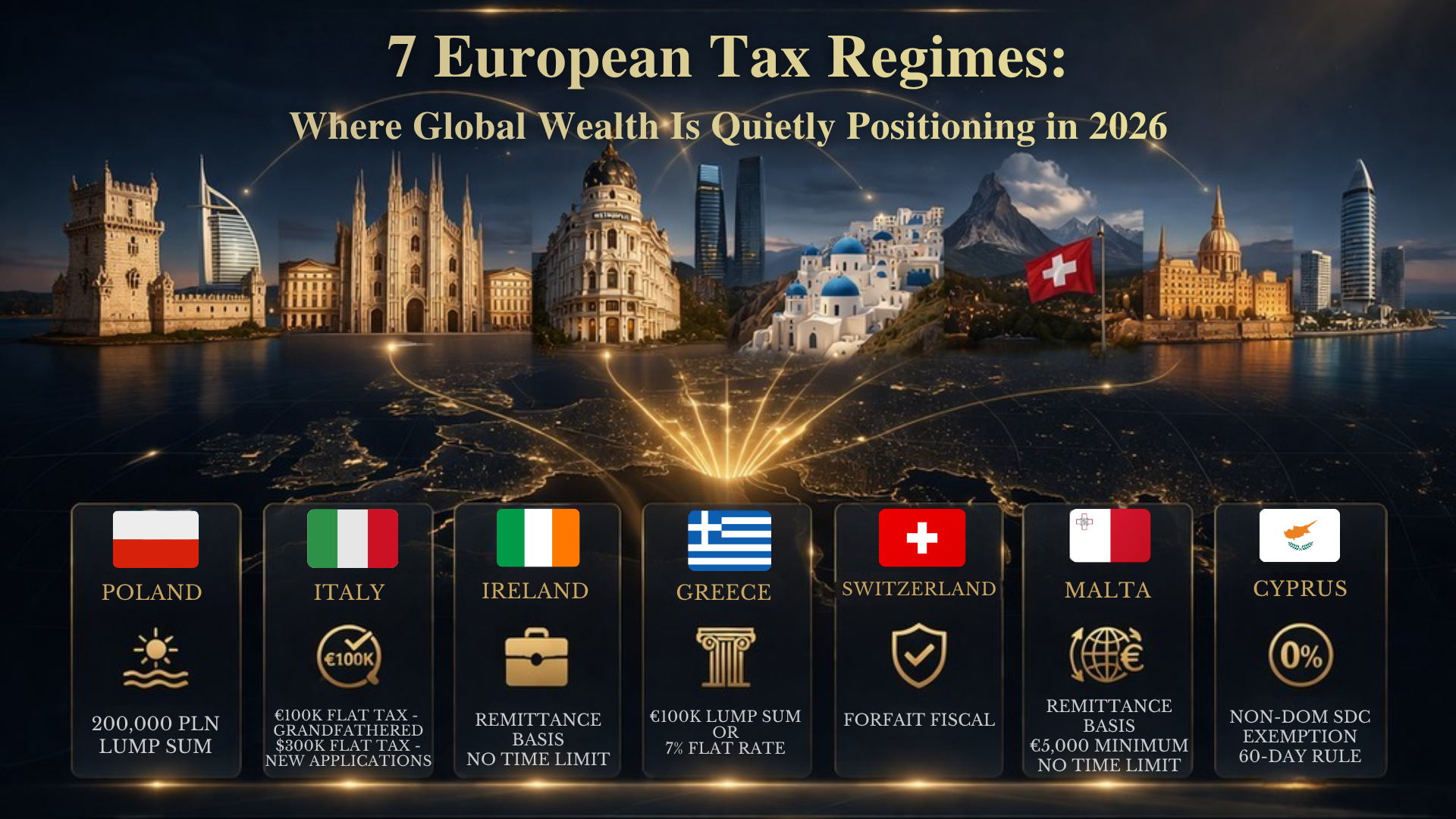
7 European Tax Regimes Attracting Global Wealth in 2026
European tax regimes are reshaping global wealth strategies in 2026. From Cyprus’ non-dom system to Italy’s €300,000 flat tax, investors…

£8.1B UK-Nigeria Trade: Nigerian Fintech and Banks Go Global
UK-Nigeria trade growth reaching £8.1B highlights a shift in global capital movement. Nigerian fintech and banks are expanding into the…

$200M Nigeria-UAE Agreement Signals Investor Confidence
The Nigeria UAE agreement marks a major shift in global investment strategy. With $200 million committed to technology and infrastructure,…

Grenada and St Kitts Lead Global Demand in CBI Programs
Grenada and St Kitts Citizenship by Investment programs continue to lead as global demand rises. HNWI are turning to proven…