
What Nigeria’s Restructuring Debate Signals to Investors
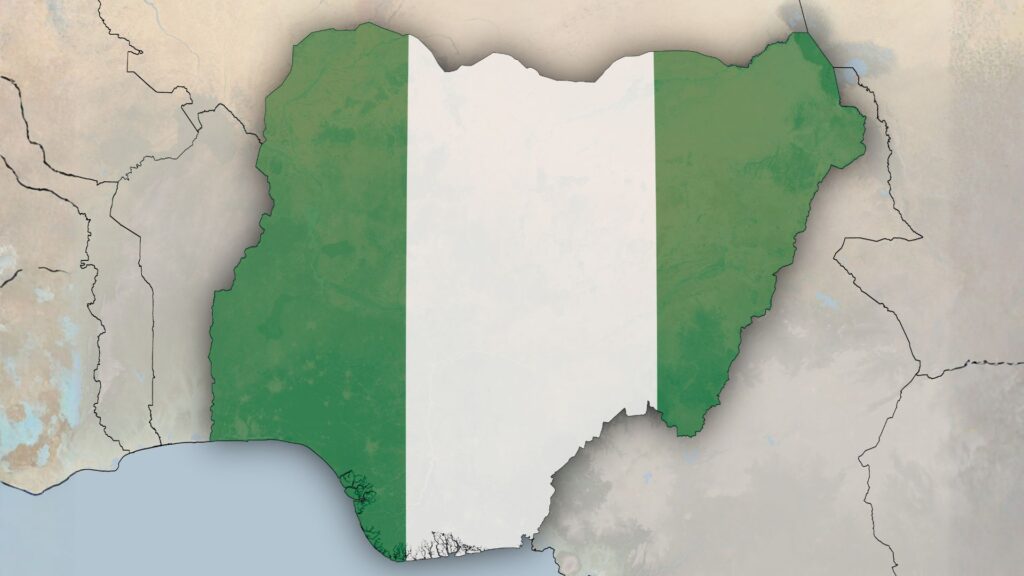
For decades, Nigeria’s restructuring debate has focused on regional autonomy and national unity. These conversations have spanned civilian and military governments, economic booms and downturns, and multiple constitutional cycles. From national conferences to expert panels and policy committees, the country has invested enormous political and financial capital into discussing reform.
Yet structurally, very little has changed.
This reality is not an indictment of Nigeria’s potential. It is an important signal for investors, business owners, and high-net-worth individuals who think in decades rather than election cycles. At this level, the conversation is not ideological. It is strategic.
A Long History Of Debate Without Execution
Nigeria’s restructuring debate is not new. Since the return to democratic rule in 1999, successive administrations have acknowledged the need to address governance efficiency, federal balance, security coordination, and economic decentralization. Each administration has approached the topic differently, but the core issues have remained consistent.
The most notable attempt to consolidate these discussions was the 2014 National Conference. The conference reportedly cost over ₦200 billion and brought together hundreds of delegates representing political, ethnic, professional, and civil society groups. It produced extensive recommendations touching on federalism, fiscal autonomy, security architecture, and constitutional amendments.
Despite its scope and cost, the recommendations were never implemented.
This outcome was not unique. Similar patterns followed earlier and later initiatives. Reports were commissioned. Dialogues were held. Findings were published. Then momentum stalled.
For observers focused on governance quality, this pattern signals institutional friction. For capital allocators, it signals something more specific: uncertainty that becomes structural rather than temporary.
Why Political Conflict Is a Wealth Event
For sophisticated investors, war is not just a geopolitical concern. It is a balance-sheet event.
When geopolitical pressure rises, governments respond by tightening control. Banks increase compliance scrutiny. Cross-border transfers slow down. Travel permissions become more restrictive. Asset ownership faces higher reporting and regulatory friction. These shifts do not require formal declarations to take effect.
Political conflict also increases the likelihood of sanctions, asset freezes, capital controls, and airspace closures. Even indirect exposure can disrupt liquidity and operations. For investors whose wealth, mobility, or family plans depend on a single jurisdiction, this environment introduces unacceptable dependency.
As a result, political risk now drives global wealth migration more than taxation or lifestyle considerations.
Why Persistent Uncertainty Matters To Capital
Markets respond to predictability. Investors do not require perfection, but they do require visibility. When a country repeatedly acknowledges structural pressure without executing reform, uncertainty shifts from a short-term variable to a long-term condition.
This type of uncertainty does not always show up immediately in economic data. It manifests gradually through:
- Slower foreign direct investment inflows
- Higher risk premiums
- Capital flight during moments of stress
- Increased currency volatility
- Conservative long-term planning by domestic businesses
Capital does not leave because of panic. It moves because of logic.
For high-net-worth individuals and business owners, this logic applies personally as well as professionally. The same principles that guide corporate diversification apply to personal wealth planning.
Global Attention Is Not A Negative Signal
In recent years, international lawmakers, institutions, and policy analysts have increasingly discussed Nigeria’s long-term stability in relation to security challenges and structural reform. These conversations are often misunderstood.
They do not suggest that Nigeria is weak. They suggest that Nigeria matters.
Strong economies attract scrutiny. Weak ones are ignored.
Nigeria remains one of Africa’s largest economies, with a massive consumer market, entrepreneurial population, and strategic regional influence. These strengths make Nigeria relevant to global capital flows, geopolitical planning, and institutional risk assessments.
When international actors analyze Nigeria’s structure, it reflects integration into global systems, not isolation from them.
For sophisticated investors, the correct response to scrutiny is not defensiveness. It is preparation.
Risk Management Versus Political Positioning
For high-net-worth individuals, business owners, and investors, the restructuring debate is not about political alignment. It is about exposure management.
At this level, wealth planning focuses on continuity under multiple scenarios. The goal is not to predict outcomes perfectly. The goal is to remain functional regardless of which outcome materializes.
This mindset shifts the conversation away from emotion and toward structure.
Risk management asks different questions:
- What happens if policy reform accelerates?
- What happens if reform stalls?
- How resilient are my assets to regulatory changes?
- How quickly can I move capital if conditions shift?
- How protected is my family’s access to education, healthcare, and mobility?
These questions do not imply pessimism. They reflect experience.
Nigeria’s Strength and The Case For Optionality
Nigeria’s long-term potential remains intact. The country’s demographics, resource base, entrepreneurial culture, and regional influence continue to attract interest. Many investors remain deeply committed to Nigeria’s growth story.
That commitment does not conflict with diversification.
In fact, Nigeria’s scale makes optionality more important, not less. When exposure is concentrated in one jurisdiction, even positive volatility carries risk. Optionality provides balance.
Sophisticated investors understand that concentration and confidence are not the same thing.
The Role of Diversification Beyond Assets
Traditional diversification focuses on asset classes. Equities, real estate, private businesses, commodities, and cash allocations form the foundation of most portfolios. However, for high-net-worth families, diversification extends further.
It increasingly includes:
- Jurisdictions
- Banking access
- Currency exposure
- Legal residency
- Global mobility
This broader approach reflects how interconnected modern wealth has become with regulation, compliance, and cross-border movement.
Access matters as much as ownership.
Mobility As A Strategic Asset
In today’s environment, mobility is not a luxury. It is a strategic asset.
The ability to travel freely, relocate temporarily, access multiple financial systems, and maintain operational flexibility has become central to wealth preservation. This is especially true during periods of policy transition, security challenges, or regulatory shifts.
Second residencies and citizenships function within this framework. They do not replace national identity. They supplement operational flexibility.
The same logic applies to holding multiple bank accounts or operating across markets. No serious business owner relies on a single point of failure.

Redundancy As a Sign of Sophistication
Redundancy often carries a negative connotation. In wealth planning, it is a marker of intelligence.
Multiple structures provide resilience. They reduce dependency on any single system and allow for faster response when conditions change.
For high-net-worth individuals, redundancy may include:
- Multiple legal residences
- Access to diversified banking systems
- Citizenship options that improve mobility
- Asset holding structures across jurisdictions
None of these actions signal disloyalty. They signal foresight.
Lessons From History
History consistently shows that periods of prolonged uncertainty reward early planners. Those who position themselves ahead of inflection points preserve choice. Those who wait for perfect clarity often find themselves reacting under pressure.
This pattern repeats across regions and generations.
Uncertainty rarely announces itself clearly. It accumulates quietly, then accelerates quickly.
The most resilient families and businesses do not attempt to predict every outcome. They build systems that function across outcomes.
Why This Moment Matters
Nigeria stands at an important intersection. The restructuring debate reflects genuine structural questions that remain unresolved. At the same time, Nigeria’s economic relevance ensures that the country will continue to attract attention, capital, and scrutiny.
These two realities coexist.
For investors and business owners, the opportunity lies in aligning optimism with preparedness. Confidence without contingency is fragile. Preparation without panic is powerful.
Building a Strategy That Preserves Flexibility
A well-structured wealth strategy does not assume decline, nor does it assume uninterrupted growth. It prepares for complexity.
Such a strategy often includes:
- Core investments aligned with long-term confidence
- Geographic diversification to reduce jurisdictional risk
- Mobility solutions that preserve access and choice
- Banking structures that support cross-border operations
- Succession planning that protects future generations
Each element reinforces the others.
Contact us if you are interested in Citizenship by Investment
Our expert advisors will have a 1-on-1 consultation to find the best solutions for you and your family and guide you through the procedure.
The Conversation Beyond Division
The restructuring debate is often framed as a question of unity versus division. For investors, that framing misses the point.
The real conversation is about foresight.
Countries evolve. Policies change. Markets adjust. Families that plan for adaptability retain control.
Nigeria’s future will continue to present opportunity. Ensuring that opportunity remains accessible under multiple scenarios is a strategic decision, not a political statement.
A Strategic Next Step
High-net-worth individuals and business owners increasingly treat global access as part of their balance sheet. Legal residency options, citizenship planning, and cross-border structuring now sit alongside traditional asset allocation.
These tools exist to preserve choice, not to replace commitment.
A thoughtful approach begins with understanding personal exposure, family goals, and long-term objectives. From there, structured solutions can be explored that align with both confidence in Nigeria and global flexibility.
If your wealth strategy does not account for jurisdictional optionality, it may be time to review it.
Positioning early preserves control, protects legacy, and ensures that opportunity remains available regardless of political outcomes.
The most successful investors do not wait for certainty. They build resilience.
Share this blog
Frequently Asked Questions
Related Articles

Beijing Is Watching Your Wealth; Turkey Offers a Legal Pathway
In an era of rising financial scrutiny, global investors are taking action. Discover why 89% of Chinese HNWIs are exploring…

Ethiopia Introduces 10 Year Golden Visa to Attract Global Investors
Ethiopia’s 10 year Golden Visa signals rising investor confidence in emerging markets. For HNWI and global investors, it offers long…

UK Visa Fee Increase 2026 Signals Changing Global Access for
The UK visa fee increase 2026 signals a shift in global mobility. Rising costs reflect strong demand and growing selectivity….
Kenya China Trade Agreement Strengthens Economic Ties
The Kenya China trade agreement opens duty free access to 98% of exports, strengthening economic ties and investor confidence. For…

Investor Demand Surges Amid Dominica’s Iranian CBI Suspension
Caribbean CBI programs are tightening eligibility, and investors are responding بسرعة. Discover why HNWI are accelerating applications, how Dominica’s recent…
What HNWI Need to Know About St Kitts Public Benefit
The St Kitts and Nevis Public Benefit Option offers HNWI a simple, transparent path to second citizenship. By focusing on…
7 European Tax Regimes Attracting Global Wealth in 2026
European tax regimes are reshaping global wealth strategies in 2026. From Cyprus’ non-dom system to Italy’s €300,000 flat tax, investors…