
Malaysia MM2H Program Nears $1 Billion in Investment Inflows
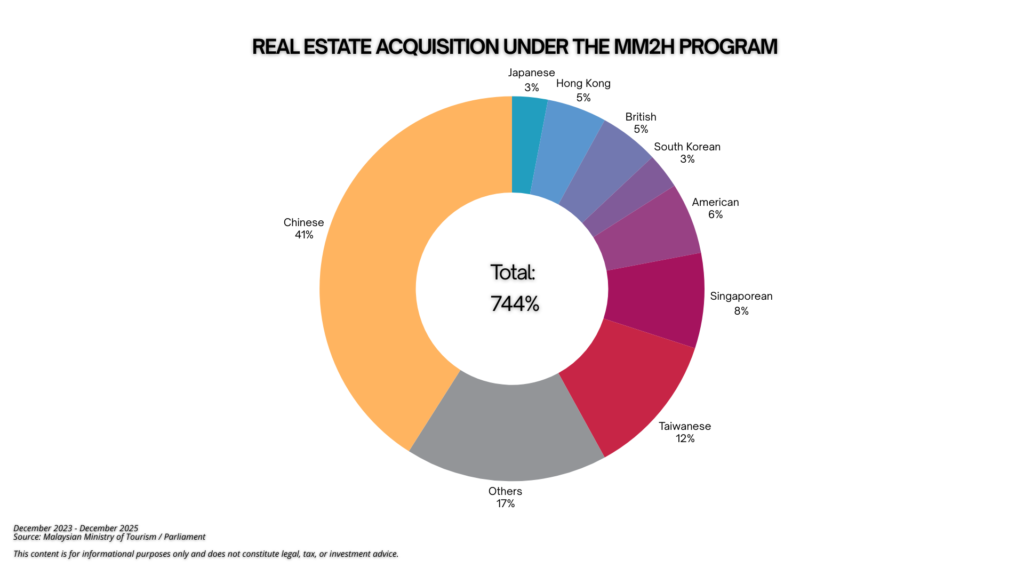
The Malaysia MM2H program has re-emerged as one of Asia’s most compelling residency-by-investment frameworks. Notably, it has attracted nearly $1 billion in investment inflows within just 18 months of its restructuring. As a result, the Malaysia MM2H program is once again gaining the attention of high net worth individuals, business owners, and globally mobile investors.
Capital does not move without reason. Instead, it flows toward stability, clarity, and long-term opportunity. Therefore, when sophisticated investors allocate close to a billion dollars into a residency framework, they validate governance and strategic direction.
Understanding the Malaysia MM2H Program
The Malaysia MM2H program, also known as Malaysia My Second Home, is a government-backed long-term residency initiative designed to attract financially qualified foreign nationals. Specifically, it allows approved participants to reside in Malaysia under renewable visa terms. In return, applicants contribute economically through structured financial commitments.
Moreover, the program underwent significant restructuring in 2024. Previously, shifting requirements had slowed participation. However, authorities introduced clearer tier categories and recalibrated financial thresholds. Consequently, investor interest rebounded.
Participants contribute through:
- Fixed deposits placed in Malaysian financial institutions
- Approved real estate acquisitions
- Government participation fees
Therefore, the framework ensures that capital directly strengthens Malaysia’s banking and property sectors.
The $1 Billion Milestone
Within 18 months of its relaunch, the Malaysia MM2H program recorded close to $1 billion in inflows and approved nearly 9,500 applicants. Importantly, this acceleration contrasts with the slower approval pace before reform.
As a result, the milestone signals renewed international confidence.
High net worth families do not commit capital impulsively. Instead, they conduct structured due diligence. For example, they evaluate:
- Legal and regulatory consistency
- Political and economic stability
- Long-term visa security
- Banking system reliability
- Property market fundamentals
Therefore, the surge in participation confirms that Malaysia currently satisfies these critical benchmarks.
For HNWIs and family offices, these reforms reduce systemic uncertainty and improve program credibility.
Why Southeast Asia Is Regaining Investor Attention
Global wealth patterns continue to shift toward Asia-Pacific. Meanwhile, Southeast Asia offers demographic growth, industrial expansion, and infrastructure development.
In this context, Malaysia occupies a strategic regional position. It provides:
- Access to major ASEAN markets
- Established financial infrastructure
- Competitive property pricing
- High-quality healthcare and education
- Strong international connectivity
Furthermore, business owners expanding into the region benefit from geographic proximity to supply chains and emerging consumer markets. Although the Malaysia MM2H program does not automatically grant employment rights, it enables principals to establish a long-term base while structuring operations separately.
Therefore, location becomes both a lifestyle and strategic advantage.
Residency as Strategic Infrastructure
Increasingly, experienced investors treat residency as strategic infrastructure rather than a lifestyle upgrade. In recent years, global volatility has reinforced the importance of jurisdictional diversification.
As a result, residency planning now supports:
- Geographic risk diversification
- Banking access in alternative jurisdictions
- Education planning for the next generation
- Estate structuring flexibility
- Regional commercial positioning
While the Malaysia MM2H program does not provide direct citizenship, it can function as one layer within a broader mobility portfolio. Consequently, many HNWIs combine residency with second citizenship strategies to build layered optionality.
Ultimately, optionality enhances resilience.
Program Integrity and Economic Alignment
Sustainable residency programs must balance accessibility with credibility. If requirements become overly restrictive, participation declines. Conversely, if standards fall too low, long-term trust erodes.
The Malaysia MM2H program appears to have recalibrated that balance. By clarifying tier structures and strengthening oversight, authorities reinforced program integrity. At the same time, they aligned financial commitments with investor expectations.
Therefore, the nearly $1 billion inflow reflects improved equilibrium.
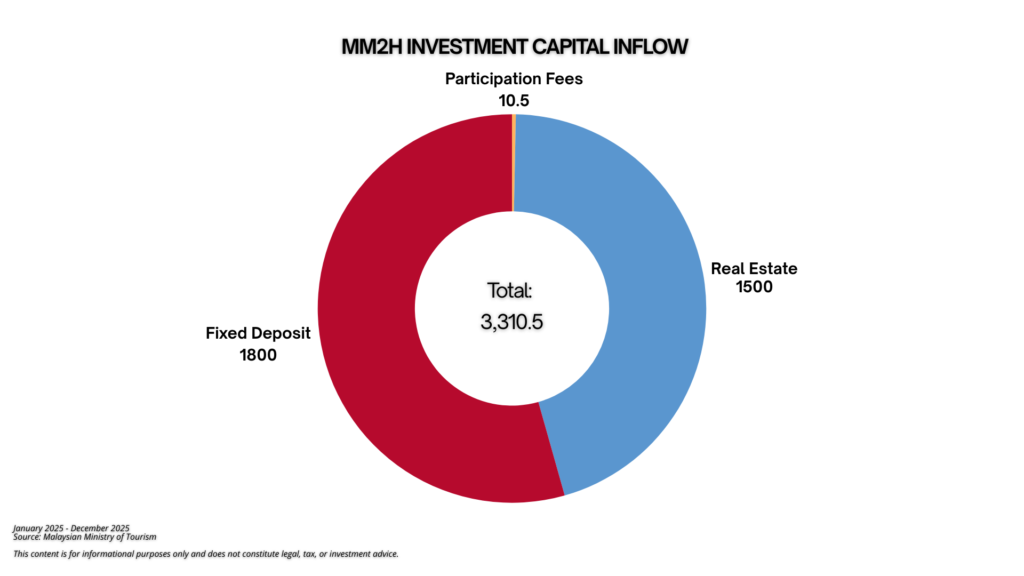
Importantly, fixed deposits increase liquidity within domestic banks. Similarly, property acquisitions stimulate development activity, particularly in urban centers. As a result, investor capital integrates directly into national economic sectors.
Programs that deliver measurable economic impact typically demonstrate stronger durability.
Risk and Due Diligence Considerations
Nevertheless, investors must evaluate residency decisions carefully. No jurisdiction operates without exposure to currency, regulatory, or macroeconomic risk.
Accordingly, key considerations include:
- Currency exposure between the Malaysian ringgit and home currency
- Domestic and cross-border tax implications
- Renewal compliance requirements
- Liquidity planning for fixed deposits
- Exit strategies for property holdings
Therefore, coordinated advisory support remains essential. Experienced professionals assess cross-border taxation, inheritance planning, and long-term suitability.
Residency planning should reinforce wealth architecture rather than complicate it.
Strategic Outlook for Global Investors
The resurgence of the Malaysia MM2H program reflects a broader global trend. As wealth becomes increasingly international, mobility evolves into a strategic asset class.
Families seek education pathways and jurisdictional flexibility. Meanwhile, entrepreneurs seek regional access and expansion. Investors, in turn, seek resilience.
Malaysia now demonstrates measurable demand, improved regulatory clarity, and regional relevance. Consequently, the nearly $1 billion milestone validates renewed investor confidence.
For high net worth individuals and business owners, jurisdictional diversification remains central to wealth protection. Therefore, the Malaysia MM2H program provides a structured pathway within Southeast Asia that aligns with both lifestyle and financial objectives.
As global uncertainty continues to shape capital allocation decisions, the Malaysia MM2H program stands as a credible residency option for long-term positioning in Asia.
Contact us if you are interested in Citizenship by Investment
Our expert advisors will have a 1-on-1 consultation to find the best solutions for you and your family and guide you through the procedure.
Take the Next Step
If you are evaluating global mobility solutions, now is the time to assess whether the Malaysia MM2H program fits within your broader diversification strategy and long-term wealth architecture. Engage experienced advisors to structure your participation carefully and position your family for strategic global mobility under the Malaysia MM2H program.
Frequently Asked Questions
Related Articles

Beijing Is Watching Your Wealth; Turkey Offers a Legal Pathway
In an era of rising financial scrutiny, global investors are taking action. Discover why 89% of Chinese HNWIs are exploring…
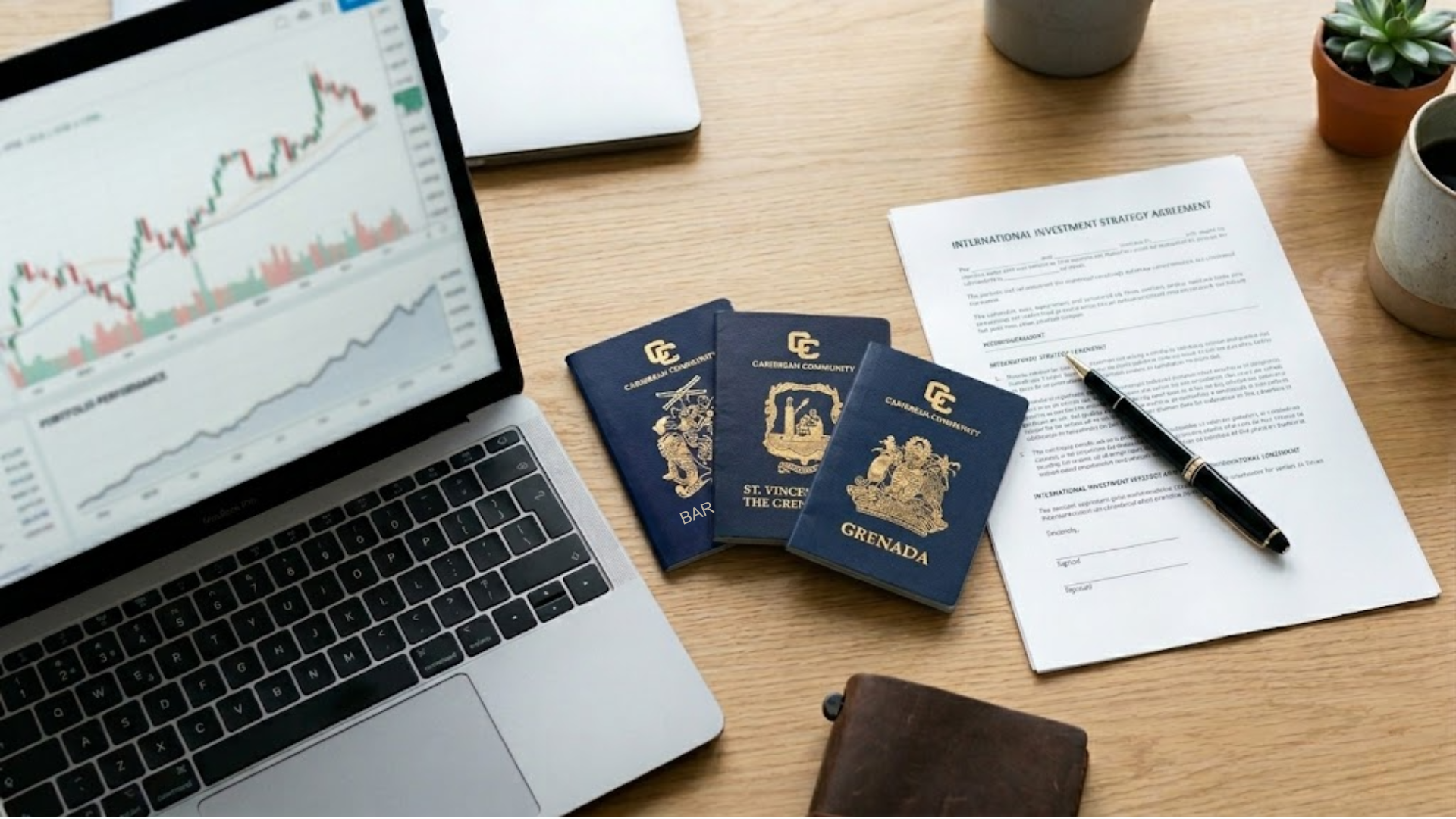
Caribbean Nations to Let Citizens Sell Citizenship to Investors
Caribbean citizenship by investment is gaining attention as a strategic tool for HNWI and global investors. As demand for mobility,…

Rising Restrictions Are Driving Strategic Mobility for Iranian HNWIs
Rising restrictions are reshaping global mobility for Iranian HNWIs. Discover how strategic residency and citizenship planning can protect wealth, ensure…

Ethiopia Introduces 10 Year Golden Visa to Attract Global Investors
Ethiopia’s 10 year Golden Visa signals rising investor confidence in emerging markets. For HNWI and global investors, it offers long…
UK Visa Fee Increase 2026 Signals Changing Global Access for
The UK visa fee increase 2026 signals a shift in global mobility. Rising costs reflect strong demand and growing selectivity….
Kenya China Trade Agreement Strengthens Economic Ties
The Kenya China trade agreement opens duty free access to 98% of exports, strengthening economic ties and investor confidence. For…

Investor Demand Surges Amid Dominica’s Iranian CBI Suspension
Caribbean CBI programs are tightening eligibility, and investors are responding بسرعة. Discover why HNWI are accelerating applications, how Dominica’s recent…