
$5 Billion in Bilateral Trade Targeted Between Nigeria and Türkiye
Introduction
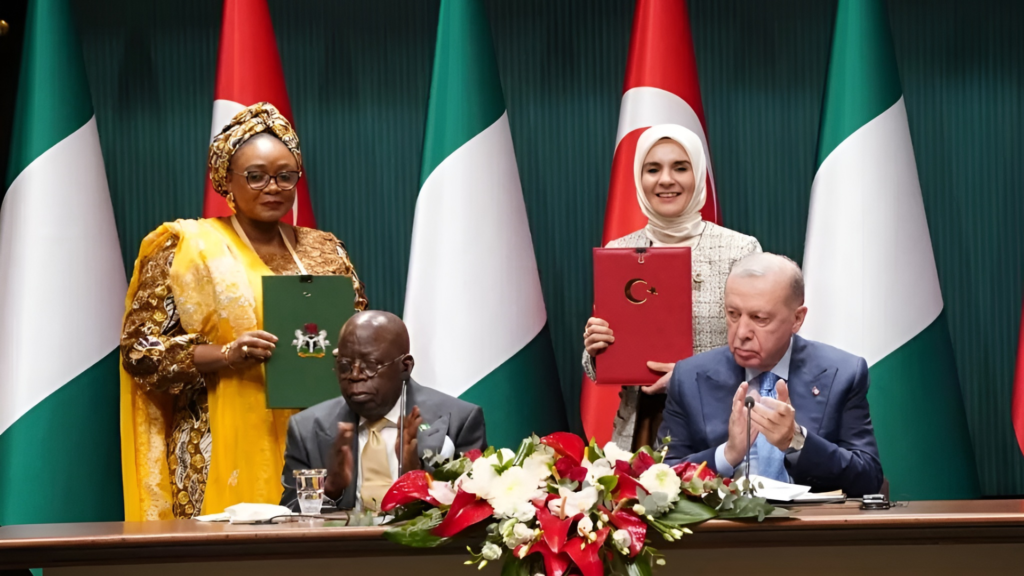
In today’s interconnected world, strategic diplomatic and economic partnerships drive sustainable growth. The recent state visit between President Bola Ahmed Tinubu of Nigeria and President Recep Tayyip Erdoğan of Türkiye has set the tone for a deeper economic relationship between the two nations, one built on trust, shared interest, and long-term opportunity. This milestone reflects a strong commitment to advancing Nigeria Türkiye bilateral trade, signaling to global investors that both countries are aligning their economic strategies for meaningful impact.
This blog explores the implications of this partnership for high‑net‑worth individuals (HNWIs), business owners, and global investors. It also sheds light on how emerging market collaborations like this one can influence investment decisions, economic growth, and long‑term wealth strategies.
Bilateral Trade: Why It Matters
Bilateral trade agreements do more than increase the flow of goods and services. They lay the foundation for:
- Enhanced market access
- Reduced barriers to entry
- Stronger investor protections
- Greater regulatory coherence
- Improved confidence among global capital allocators
Nigeria’s position as a central trade partner for Türkiye in Africa underscores the country’s economic potential. It also highlights the importance of diversified trade relationships for Africa’s largest economy.
For investors, this is an important signal. When nations align around clear economic goals, it creates a stable environment in which long‑term capital can flow with reduced uncertainty. Trade growth often precedes investment flows, and investment flows often precede sustained economic development.
Growing Investment Linkages
The nine agreements signed during the visit reinforce institutional ties. These agreements extend beyond traditional diplomacy to target practical collaboration that affects real economic outcomes.
Turkish investments in Nigeria already span key sectors such as:
- Construction
- Energy
- Textiles
- Manufacturing
These industries are not static. They are expanding with growing demand, evolving supply chains, and increasing integration with global markets.
For example, energy infrastructure remains a top priority for both countries. Nigeria’s vast energy potential coupled with Türkiye’s technical capabilities presents opportunities for large‑scale projects that benefit communities and investors alike. Industrial supply chain links also position both economies to leverage each other’s strengths, creating competitive advantages that transcend regional limitations.
The result is a framework that encourages commercial participation, supports capital deployment, and enhances investor trust.
What This Means for Investors and Business Owners
Emerging markets often present high‑growth potential, but they also bring unique risks. Political uncertainty, regulatory complexity, and limited market access can deter institutional and private capital. However, strategic government‑level partnerships help mitigate these concerns.
The Nigeria–Türkiye engagement provides a clear example of how economic diplomacy can strengthen investor confidence by:
- Improving policy clarity
- Increasing cross‑border cooperation
- Aligning economic interests between nations
- Supporting initiatives that reduce entry barriers
This type of engagement matters to HNWIs and global investors who seek diversification, growth, and stability. Access to new markets helps spread risk and enhances portfolio resilience.
Business owners also stand to benefit. Strategic partnerships often translate into joint ventures, shared technology transfers, and collaborative ventures. These opportunities can accelerate growth, open new revenue streams, and position companies to leverage global trends.
The Role of Emerging Market Confidence
Investor confidence is not built overnight. It requires persistent policy commitment, transparent governance, and visible reforms. The recent Nigeria–Türkiye engagement signals all three.
When nations work together to deepen economic cooperation, it sends a message far beyond diplomatic circles. It indicates:
- Trust in economic reforms
- Commitment to growth‑oriented policies
- Willingness to diversify economic relationships
- Support for cross‑border investment frameworks
For investors, these signals matter. Confidence in economic stability encourages capital deployment. Capital deployment drives growth. Growth generates returns.
This virtuous cycle is essential for investors targeting frontier and emerging markets. It also reinforces the need for global mobility, strategic diversification, and flexible investment structures.
Strategic Sectors With Opportunity
Several sectors are particularly poised to benefit from Nigeria–Türkiye cooperation:
Energy
Energy remains central to both economies. Nigeria’s abundant resources combined with Türkiye’s technological and engineering strengths make collaborative energy projects highly viable. These include power generation, renewable energy initiatives, and infrastructure modernization.
Infrastructure
Infrastructure development supports trade, connectivity, and economic productivity. Partnerships in this area can drive improvements in logistics, transportation networks, and industrial clusters.
Manufacturing and Industrial Supply Chains
Turkish firms already have a foothold in Nigeria’s manufacturing sectors. As collaboration expands, opportunities increase for local and foreign businesses to participate in production ecosystems that serve both domestic and export markets.
Textiles
The textile sector is another area with longstanding engagement. Investment here supports local employment, export potential, and value chain development.
Building Long‑Term Confidence
What sets this engagement apart is not just the ambition, it is the execution. The signing of nine agreements demonstrates that both governments are not merely discussing ideas; they are formalizing commitments that have real economic implications.
For HNWIs and institutional investors, this level of commitment is crucial. It enhances perceived stability, reduces risk premiums, and makes emerging market investments more attractive relative to purely developed market options.
Moreover, it reflects an important trend in global capital allocation: investors are increasingly looking beyond traditional investment corridors. They seek markets with growth potential, strategic partnerships, and policy alignment that support sustainable returns.

The Importance of Global Access and Mobility
In a world where capital moves fast, access matters. Whether through international business structures, residency, or citizenship planning, being positioned to respond to global economic opportunities is a competitive advantage.
Emerging market partnerships like Nigeria–Türkiye show why global access matters:
- It provides flexibility for investment deployment.
- It supports cross‑border business operations.
- It enhances personal and corporate mobility.
- It enables participation in high‑growth regions.
For investors and business leaders, these factors are increasingly part of strategic planning.
Positioning for the Future
Investors who recognize the value of strategic international relationships are well positioned for growth. As global economic ties evolve, markets that foster trust and collaboration will attract capital and innovation.
The Nigeria–Türkiye partnership is a strong example of how economic diplomacy can create an environment that supports investment confidence. It signals:
- Clarity in vision
- Strength in cooperation
- Confidence in economic potential
For forward‑thinking investors and business owners, this is an invitation to consider opportunities in emerging economies that demonstrate credible, long‑term growth strategies.
What’s Next for Investors and Business Leaders
As Nigeria and Türkiye work toward their $5 billion trade target, investors and business leaders should watch for developments in:
- New investment vehicles that arise from bilateral agreements
- Infrastructure projects that may open private participation
- Joint ventures and cross‑border initiatives
- Policy reforms that support investment flows
These developments will shape opportunity zones, influence capital allocation decisions, and create new arenas for growth.
Contact us if you are interested in Citizenship by Investment
Our expert advisors will have a 1-on-1 consultation to find the best solutions for you and your family and guide you through the procedure.
Position Yourself for Global Opportunity
Emerging market partnerships signal opportunity and confidence. For investors, this means evaluating how strategic global access can enhance your portfolio and protect your wealth against concentrated risk.
If you are considering expanding your global presence or diversifying your investment strategy, now is the time to act.
Contact us to explore how global mobility and strategic investment planning can position you for long‑term success in a rapidly evolving economic landscape.
Share this blog
Frequently Asked Questions
Related Articles

Beijing Is Watching Your Wealth; Turkey Offers a Legal Pathway
In an era of rising financial scrutiny, global investors are taking action. Discover why 89% of Chinese HNWIs are exploring…

Caribbean Air Expansion with Air Peace Connects Nigeria to Key
Caribbean air expansion with Air Peace connects Nigeria to key destinations, improving global mobility for HNWI investors. Enhanced connectivity supports…
Rising Restrictions Are Driving Strategic Mobility for Iranian HNWIs
Rising restrictions are reshaping global mobility for Iranian HNWIs. Discover how strategic residency and citizenship planning can protect wealth, ensure…

Ethiopia Introduces 10 Year Golden Visa to Attract Global Investors
Ethiopia’s 10 year Golden Visa signals rising investor confidence in emerging markets. For HNWI and global investors, it offers long…

UK Visa Fee Increase 2026 Signals Changing Global Access for
The UK visa fee increase 2026 signals a shift in global mobility. Rising costs reflect strong demand and growing selectivity….
Kenya China Trade Agreement Strengthens Economic Ties
The Kenya China trade agreement opens duty free access to 98% of exports, strengthening economic ties and investor confidence. For…

Investor Demand Surges Amid Dominica’s Iranian CBI Suspension
Caribbean CBI programs are tightening eligibility, and investors are responding بسرعة. Discover why HNWI are accelerating applications, how Dominica’s recent…