
Second citizenship,
first‑class counsel.
Twenty‑eight government‑backed programs across the Caribbean, Europe, the Gulf and the Americas — guided by a licensed firm from the first eligibility check to final approval.
A second passport,
for life.
Fifteen citizenship programs, from $95,000. Up to 157 visa‑free destinations, no residence requirement, and citizenship that passes to your children.


A place in Europe,
on your terms.
Golden visas and investor residency from €50,000 — Schengen access, permanent residency, and in Portugal a path to an EU passport.
Move freely.
Visa‑free travel, international banking, world‑class schools and new markets — the practical freedoms behind a second nationality. Every gold line is a border one of our passports crosses without a visa.
 St. Kitts & Nevis157
Built for the generation
after yours.
Spouses, children, parents and grandparents are included wherever a program allows. We map every family member’s eligibility before you choose.
One firm.
Every route.
A licensed and certified agent working directly with 14+ governments. Six languages in‑house; more than 2,000 successful applications.
Current programs.
Current numbers.
Minimum investment, realistic processing times and visa‑free reach — indicative as of September 2026, confirmed for your case before you commit.
Proof, not promises.
What we can show, and what we would rather you check for yourself.
 Zaid Al HindiCEO & FounderHI
 Hekma IskandaraniChief Operating OfficerMD
 Mary De LeonHead of Operations & PartnershipsKA
 Kamel AyacheManaging PartnerMB
 Moe BakkourDirector of the AmericasNI
 Noha IbrahimHead of MarketingTM
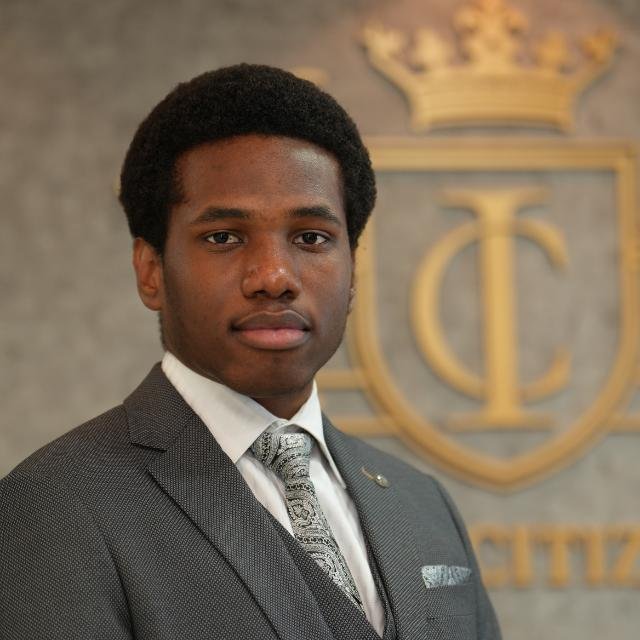 Terrell MenakayaCountry Director – NigeriaHA
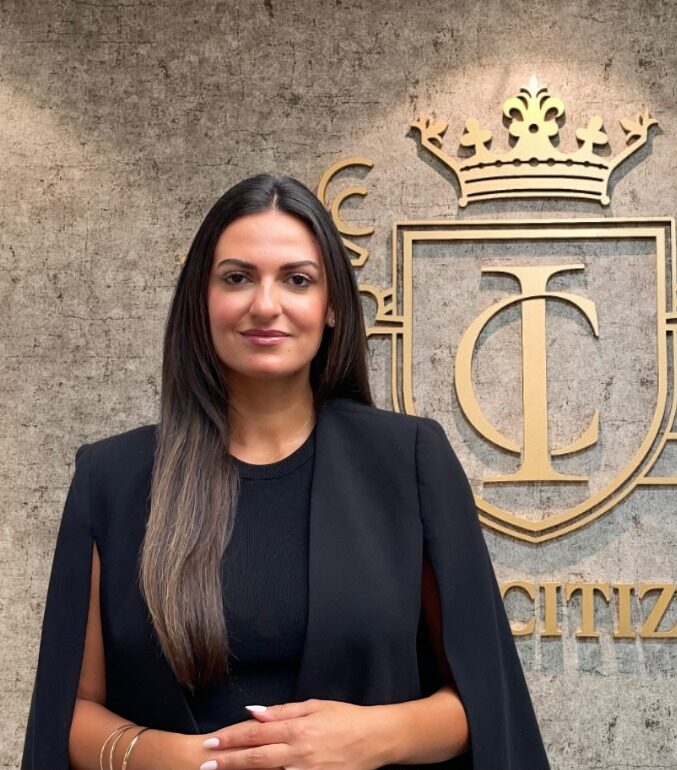 Hoda Abou JaoudeBusiness Development Manager
Before you commit you receive one itemised, all‑in estimate — investment, government fees, due diligence and our fees. Nothing is added later, and the processing time we quote is the one we are seeing this quarter, not the one in the brochure.
Every client works with a named senior advisor and a case manager, both reachable on WhatsApp. You know who is accountable for your file from the first call, and you never repeat your story.
Find your program.
Three answers. Three realistic options — then a confidential 30‑minute call with a senior advisor.
Indicative figures, September 2026. Eligibility, government fees and processing times are confirmed in consultation.
Questions investors
ask first.
Can my family be included in one application?
Yes. Most programs include a spouse and dependent children, and many also include dependent parents and grandparents. We map every family member’s eligibility before you choose a program, so nobody is left out later.
How long does it really take?
From two months (Vanuatu) to around eighteen months (Saint Lucia) for citizenship, and from one month (UAE) to two years or more (Portugal, US EB‑5) for residency. We quote current government timelines, not brochure ones.
Is citizenship by investment legal and recognised?
Yes. Every program we offer is written into that country’s law and run by a government unit. Applicants pass multi‑layer due diligence before approval — which is exactly what keeps these passports credible.
Do I have to live there?
Usually not. Caribbean citizenship programs have no residence requirement; Greece and Hungary have none for the permit; Portugal asks for an average of seven days a year. We confirm the rule for your chosen program in writing.
What does it cost beyond the investment?
Government processing and due‑diligence fees, plus our professional fees. You receive one written, all‑in figure before you commit, so nothing is added later.
+971 4 546 1110
+234 902 222 2024
Imperial Citizenship is a licensed and certified agent. Minimum investments, fees and processing times are set by each government and change without notice; figures on this site are indicative as of September 2026 and are confirmed individually during consultation. Nothing on this site is legal, tax or investment advice.