
USA vs. Iran War: Who Will Run for a Second Passport

Geopolitical risk has always shaped the movement of capital, but rarely has it done so with the speed, scale, and visibility seen today. As tensions between the United States and Iran continue to rise, investors are not waiting for formal declarations or definitive outcomes. Instead, they are reassessing exposure, jurisdictional concentration, and long-term mobility well before escalation becomes public. In this environment, citizenship by investment (CBI) becomes a strategic planning tool investors can control, allowing those who act early to preserve flexibility, leverage, and choice.
For high-net-worth individuals, business owners, and globally active investors, this moment is not about speculation. It is about preparedness. History consistently shows that when major powers drift toward conflict, the consequences extend far beyond military theaters. They reach financial systems, banking access, travel rights, regulatory oversight, and personal freedom.
The question is no longer whether geopolitical risk matters. The question is who acts early enough to stay in control.
The Long Shadow of USA–Iran Tensions
The relationship between the United States and Iran has remained volatile since the 1979 Iranian Revolution. Over decades, this rivalry has evolved through sanctions, proxy conflicts, diplomatic breakdowns, and periodic military confrontations. Even in periods without open war, the tension has shaped regional stability and global markets.
Today’s environment feels especially fragile. Issues surrounding Iran’s nuclear ambitions, military activity across the Middle East, and U.S. strategic responses continue to raise the probability of escalation. While neither side publicly seeks a full-scale war, markets and investors understand that geopolitical outcomes rarely follow official narratives.
This uncertainty alone influences decision-making. Investors do not wait for certainty when the downside risk is asymmetric.
Why Political Conflict Is a Wealth Event
For sophisticated investors, war is not just a geopolitical concern. It is a balance-sheet event.
When geopolitical pressure rises, governments respond by tightening control. Banks increase compliance scrutiny. Cross-border transfers slow down. Travel permissions become more restrictive. Asset ownership faces higher reporting and regulatory friction. These shifts do not require formal declarations to take effect.
Political conflict also increases the likelihood of sanctions, asset freezes, capital controls, and airspace closures. Even indirect exposure can disrupt liquidity and operations. For investors whose wealth, mobility, or family plans depend on a single jurisdiction, this environment introduces unacceptable dependency.
As a result, political risk now drives global wealth migration more than taxation or lifestyle considerations.
Why Second Passports Become Strategic
Second citizenship and residency by investment programs historically surge during periods of instability. However, the motivation has evolved.
Today’s demand reflects strategy, not panic. Wealthy individuals no longer view second passports as luxury items or lifestyle upgrades. They view them as tools for risk management, jurisdictional diversification, and long-term continuity.
A second passport creates optionality. It allows investors to adapt rather than react. When pressure rises, options disappear quickly. Those who prepared early maintain flexibility.
This shift explains why citizenship by investment has matured into a regulated, credible asset class used by experienced investors worldwide.
Who Will Seek a Second Passport First
As tensions between the U.S. and Iran persist, certain nationalities and investor profiles consistently act early.
1. Iranian High-Net-Worth Individuals and Business Owners
Iranian entrepreneurs face one of the most restrictive geopolitical environments globally. Sanctions limit banking access, complicate international transactions, and restrict travel to many destinations.
Many Iranian investors already operate internationally through foreign companies, partnerships, or real estate holdings. However, reliance on a single nationality creates constant friction.
A second passport offers functional benefits. It restores mobility, improves access to global banking, and enables business continuity without repeated regulatory obstacles. For this group, second citizenship is not a hedge. It is an operational necessity.
2. American Investors With Global Exposure
American investors increasingly reassess jurisdictional concentration. The United States maintains unmatched global influence, but that influence brings regulatory complexity.
U.S. business owners with offshore structures, foreign investments, or international operations face increasing reporting obligations and geopolitical exposure. Rising tensions introduce uncertainty around compliance, taxation, and global access.
For many Americans, second citizenship or long-term residency functions as a diversification strategy. It provides optionality, planning flexibility, and long-term security without undermining primary citizenship.
3. Dual Nationals and Investors With Persian Gulf Ties
High-net-worth individuals connected to Kuwait, the UAE, Qatar, Saudi Arabia, Oman, and Bahrain monitor regional risk closely. Their wealth strategies depend on uninterrupted access to international markets, travel corridors, and banking systems.
Even when domestic conditions remain stable, regional escalation prompts proactive planning. Jurisdictional diversification protects family interests and future mobility.
4. Israeli and Turkish Business Owners
Israeli and Turkish investors operate in geopolitically sensitive regions where spillover risk remains constant. Markets, currencies, and travel access can shift quickly in response to regional developments.
For these investors, second citizenship supports resilience. It preserves global mobility and protects long-term planning against sudden restrictions.
5. Lebanese and Iraqi Families
Lebanese and Iraqi families bring lived experience. They have seen how quickly political instability can disrupt banking systems, currencies, and daily life.
This experience drives early action. A second passport offers safety, continuity, and generational security when domestic conditions become unpredictable.
6. Asian and African Investors With Regional Exposure
Investors in Pakistan, India, and Nigeria increasingly monitor global conflict risk due to trade exposure, currency sensitivity, and cross-border business ties. Global instability affects emerging markets quickly and unevenly.
For internationally active investors in these regions, second citizenship enhances travel freedom and financial flexibility.
Why Timing Matters More Than Ever
The timing of action determines outcomes.
Historically, demand for citizenship by investment spikes sharply once crises become visible. At that stage, processing times lengthen, costs rise, and options narrow.
Wealthy individuals who act preemptively secure better terms, wider choice, and smoother processes. Those who wait often move under pressure.
Preparedness does not require relocation. It requires structure.
What Second Citizenship Provides During Conflict
Second citizenship offers tangible benefits during geopolitical stress.
Asset Protection
Jurisdictional diversification improves access to banking, protects against unilateral freezes, and enables legal structuring across multiple systems.
Global Mobility
During periods of geopolitical disruption, when airspace closes or travel restrictions tighten, a second passport preserves access to essential routes for business and relocation.
Family Security
Education, healthcare, and residency planning become significantly easier with diversified nationality options.
Risk Diversification
Sanctions, travel bans, and regulatory actions disproportionately affect individuals tied to a single nationality. Second citizenship spreads exposure.
Why Rising Demand Strengthens Credible Programs
Contrary to common assumptions, geopolitical tension does not weaken established CBI programs. It strengthens them.
As demand rises, governments enhance due diligence, tighten compliance, and reinforce transparency. This process increases trust and long-term stability.
Serious investors gravitate toward regulated frameworks. Speculative actors fall away.
This maturation reinforces the legitimacy of citizenship by investment as a strategic planning too
Mobility Is About Continuity, Not Escape
A second passport does not signal abandonment. It signals foresight.
For business owners, it ensures operational continuity. For families, it protects long-term plans. For investors, it preserves optionality.
Ultimately, mobility enables control when systems tighten.
Preparedness Over Prediction
No one can predict whether tensions between the U.S. and Iran will escalate into open conflict. Nevertheless, informed investors act based on probability, not prediction.
They rely on probability, precedent, and asymmetric risk. The cost of preparing early remains manageable. The cost of reacting late often proves irreversible.
In practice, options only matter if they exist before urgency arises.
Contact us if you are interested in Citizenship by Investment
Our expert advisors will have a 1-on-1 consultation to find the best solutions for you and your family and guide you through the procedure.
When Preparation Becomes a Strategic Asset
Geopolitical risk will continue to shape markets, regulations, and mobility. The only variable investors control is preparation.
If your assets, businesses, or family plans rely on a single jurisdiction, now is the time to reassess your exposure. As a result, strategic planning works best when options remain open and timelines remain flexible.
For this reason, a confidential consultation can help you evaluate how citizenship by investment fits into your long-term wealth and family strategy, before uncertainty turns into urgency.
Preparation is not fear. It is control.
Share this blog
Frequently Asked Questions
Related Articles

Beijing Is Watching Your Wealth; Turkey Offers a Legal Pathway
In an era of rising financial scrutiny, global investors are taking action. Discover why 89% of Chinese HNWIs are exploring…

China Ends 30-Year Foreign Investor Dividend Tax Exemption
China has ended a tax exemption that protected certain dividend income received by foreign individuals for more than 30 years….

Why 61% of UK Millionaire Investors Consider Moving Abroad
A survey of 341 wealthy UK investors found that 61% have considered becoming resident overseas, while 97% expect taxes to…
Countries Want More Than Tourists. They Want Wealthy Families.
The valuable arrival is no longer just the tourist who spends for a week. Countries are designing residency, tax and…
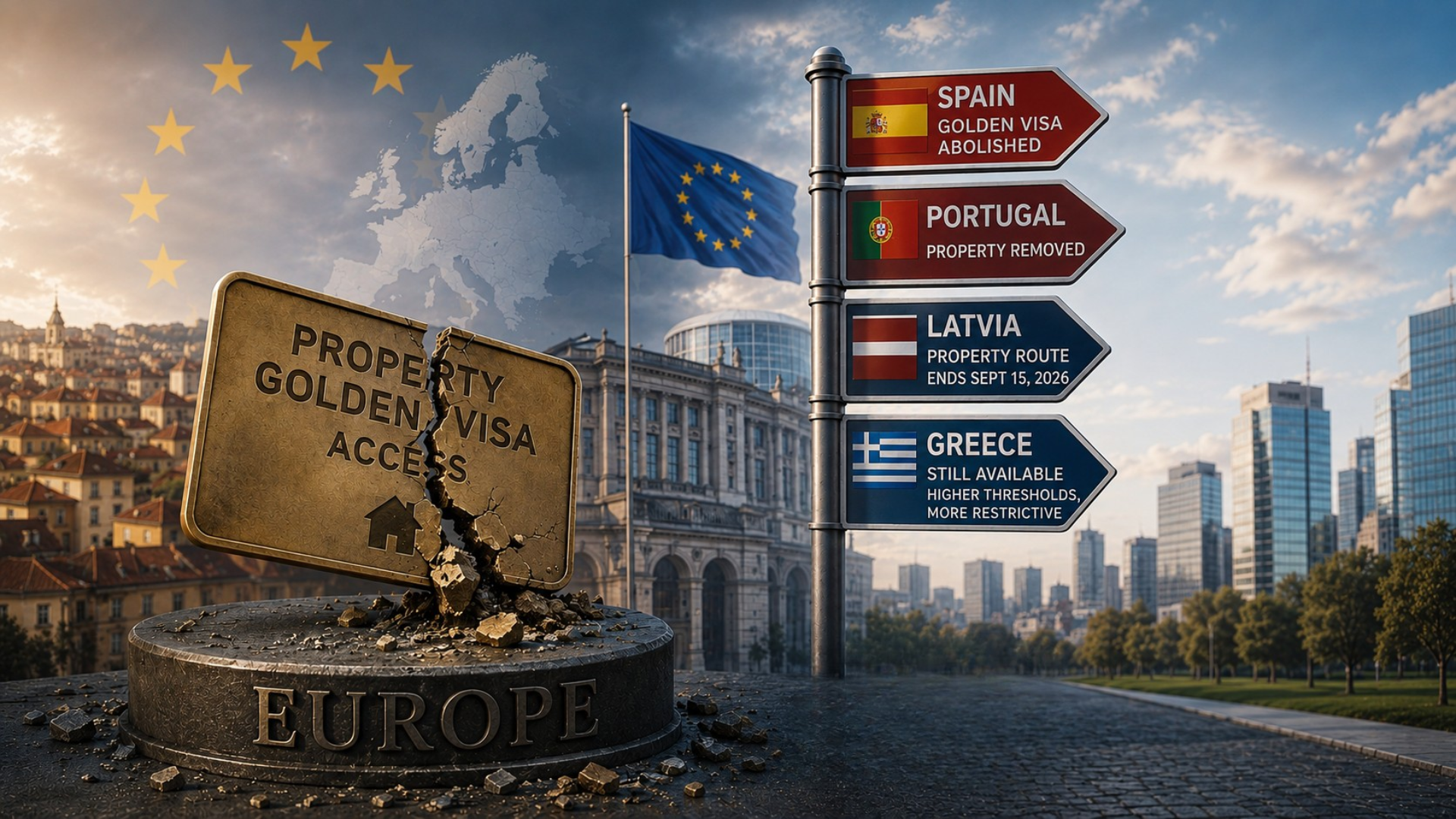
Europe Is Quietly Killing the Traditional Golden Visa Model
Europe’s familiar property-for-residence model is becoming harder to find. Latvia is removing real estate from its investor residence framework, following…

Why 21% of Global CBI Applicants Are American
Americans now account for 21% of global citizenship by investment applications, according to the World Citizenship Report 2026. The figure…
