
Iran’s Currency Collapse: When the Rial Equals Zero in Real Terms
A Financial Crisis Beyond Politics
Iran’s current situation can no longer be viewed solely through a political lens. The Iran currency collapse represents a deep financial crisis with long-term consequences for individuals, families, and businesses. Inflation, sanctions, capital controls, and severe currency devaluation are converging into a single outcome: the rapid erosion of wealth held within one jurisdiction.
For high-net-worth individuals, business owners, and investors, this is not a regional issue. Instead, it clearly shows what happens when individuals concentrate their wealth, global mobility, and legal status in a single country during periods of instability.
The Collapse Of The Iranian Rial In Real Terms
The Iran currency collapse has driven the Iranian rial collapse to one of the steepest currency declines globally over the past decade. On the open market, exchange rates have reached historic lows, with the rial trading at fractions of a cent against major currencies. Since 2018 alone, it has lost over 90 percent of its value in real terms.
This currency collapse has immediate and compounding effects:
- Savings held in local currency lose purchasing power rapidly
- Salaries fail to keep pace with inflation
- Imported goods and raw materials become prohibitively expensive
- Long-term contracts and business planning become unreliable
When a national currency deteriorates at this scale, it signals a structural breakdown in confidence, both domestically and internationally.
What Happens To Money Held Inside The System
One of the most critical consequences of the Iran currency collapse is restricted access to capital. Authorities enforce banking restrictions, capital controls, limited foreign exchange access, and blocked international transfers, making it increasingly difficult, and in some cases impossible, to move money held within domestic banks. Even when funds remain visible on paper, individuals and businesses often lose practical control over how and where they can use their capital.
In such environments, wealth faces multiple layers of financial risk:
- Inflation steadily erodes real value
- Currency conversion becomes restricted, delayed, or prohibitively expensive
- International diversification becomes limited or completely blocked
- Emergency liquidity outside the country becomes inaccessible when it is needed most
For business owners, these constraints translate into real operational challenges. Companies struggle to pay overseas suppliers, maintain foreign partnerships, or plan cross-border expansion. Even profitable businesses can find themselves trapped by a system that restricts cash flow, limits financial flexibility, and undermines long-term strategic planning.
The Investor Divide: Exposure Versus Diversification
Periods of systemic stress such as the Iran currency collapse expose a clear divide. On one side are those whose assets, legal status, and mobility are tied to a single country. On the other are those who prioritized wealth diversification early.
Iranian investors and families who secured residency diversification or second citizenship years ago now operate under fundamentally different conditions. Their assets are spread across jurisdictions. Their businesses retain access to international banking systems. Their families maintain freedom of movement, education, and healthcare options abroad.
This difference is not rooted in privilege. It is rooted in planning.
Diversification does not eliminate risk, but it redistributes it, a core principle of sophisticated wealth management.
Why This Matters Beyond Iran
The Iran currency collapse is not an isolated event. Over the past decade, global investors have witnessed:
- Sudden currency controls in emerging and developed markets
- Freezing or restriction of bank accounts during crises
- Sanctions impacting private individuals, not just governments
- Abrupt regulatory shifts affecting residency, taxation, and capital
As 2026 approaches, geopolitical risk and economic uncertainty are expected to intensify globally. Political instability, regional conflicts, fiscal pressure, and policy unpredictability are no longer exceptions. They are recurring features of the global landscape.
For HNWI investors, the question is no longer whether disruption will occur, but where and how quickly it will spread.
The Concentration Risk Of A Single Passport
Most investors understand concentration risk in portfolios. Holding all assets in one stock, one sector, or one currency is widely recognized as unsound strategy.
Yet many still accept concentration risk in legal status and citizenship, a vulnerability exposed during events such as the Iranian rial collapse.
A single passport ties your rights, access, and protections to one government, one legal system, and one geopolitical reality. When that system is stable, the risk is invisible. When instability emerges, the lack of alternatives becomes immediately apparent.
Citizenship diversification and residency planning function as asset protection tools, not lifestyle upgrades. They provide legal optionality when borders close, policies change, or systems come under pressure.
Residency And Citizenship As Strategic Instruments
Strategic residency and citizenship planning is not about abandoning one’s home country. In most cases, investors maintain their primary residence, business operations, and cultural ties exactly where they are.
What changes is optionality.
Alternative residency or second citizenship can provide:
- Access to stable banking systems
- Legal pathways for capital movement
- Visa-free or simplified global travel
- Educational and healthcare options abroad
- Business continuity across borders
For entrepreneurs, this ensures continuity. For families, long-term security. For investors, insulation against systemic financial shocks.
The Timing Factor Most Investors Overlook
One of the most overlooked lessons from the Iran currency collapse is timing. Residency diversification and citizenship options are easiest to secure before they are urgently needed.
During crises, governments tighten policies. Processing times increase. Requirements change. Options narrow.
Those who planned early retain flexibility. Those who wait often find themselves reacting under pressure, with limited alternatives.
A Global Shift In Investor Mindset
Globally, there is a visible shift in how sophisticated investors approach personal sovereignty. Global mobility, jurisdictional diversification, and legal flexibility are increasingly viewed as pillars of wealth preservation.
Lived experience drives this shift, not speculation.
Contact us if you are interested in Citizenship by Investment
Our expert advisors will have a 1-on-1 consultation to find the best solutions for you and your family and guide you through the procedure.
Planning For Uncertainty, Not Prediction
No one can predict geopolitical or economic outcomes with certainty. But risk management does not require prediction. It requires preparation.
Diversifying across jurisdictions is not fear-driven. It is a rational response to a world where systems change faster than expected.
Looking Ahead
The Iran currency collapse is a powerful reminder of how quickly financial realities can shift. It highlights the vulnerability of wealth held entirely within one system and the advantages of proactive asset protection and jurisdictional diversification.
As global uncertainty increases, the real question for investors is whether their current structure is resilient enough to withstand disruption.
If you tie your wealth, mobility, and banking access to a single country, now is the time to review your exposure and explore strategic diversification options before uncertainty becomes personal.
Share this blog
Frequently Asked Questions
Related Articles

Beijing Is Watching Your Wealth; Turkey Offers a Legal Pathway
In an era of rising financial scrutiny, global investors are taking action. Discover why 89% of Chinese HNWIs are exploring…
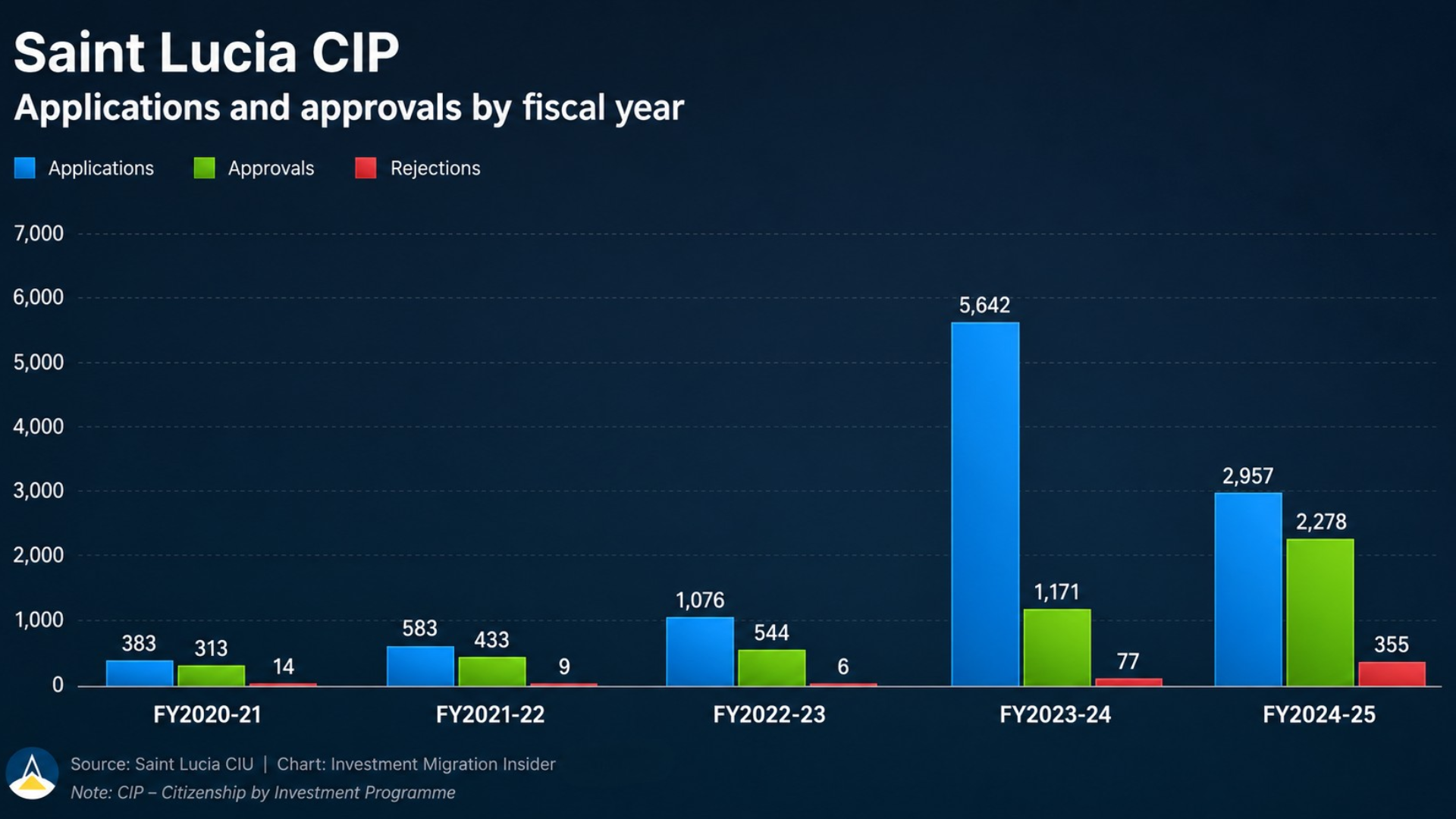
Saint Lucia Citizenship by Investment Approvals Reach 2,278
Saint Lucia approved 2,278 citizenship by investment applications in 2024/25 while completing 2,633 decisions. The programme also rejected 355 cases,…
Dubai Is Proving Its Strength Despite Regional Uncertainty
Dubai is showing why resilience matters to global investors. Despite regional uncertainty, its business environment, infrastructure, connectivity, and financial systems…
Bulgaria Golden Visa Could Face New Residency Rules
The Bulgaria Golden Visa could face an important change as lawmakers consider a new physical presence requirement for permanent residents….
Greek Golden Visa for Nigerians Seeking European Residency
The Greek Golden Visa for Nigerians gives HNWI, business owners and investors a flexible route to European residency. With Schengen…

Grenada Proposes New Residency Rules for CBI Investors
Grenada is considering new residency and compliance measures for its Citizenship by Investment Programme. Proposed changes include physical presence, integration,…
