
The Next Real Estate Advantage for Global Investors
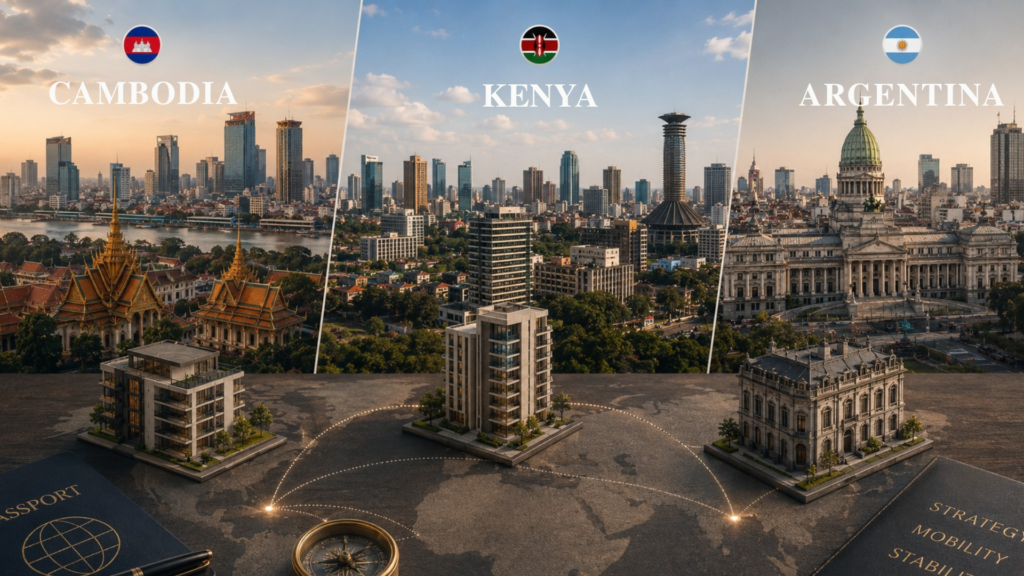
The next real estate advantage for global investors is no longer found only in traditional property markets. In 2026, HNWIs, business owners, and investors are looking at emerging destinations that can offer growth, mobility, stability, and stronger long-term positioning. Real estate is becoming more than an asset class. It is becoming part of a wider global strategy.
For many years, international investors focused on familiar cities such as London, New York, Paris, Singapore, and Dubai. These locations still matter, and they continue to attract serious capital. However, many of these markets now come with high prices, heavy competition, and lower room for early-stage growth.
That is why more investors are paying attention to places that once looked too complex or too unfamiliar. Cambodia, Kenya, and Argentina are three examples. Each market offers a different opportunity, and each carries different risks. The important point is not that every investor should buy property in these countries. The point is that global real estate strategy is changing.
Today, the strongest investors are not only asking where property prices may rise. They are asking where real estate can support access, protection, mobility, and long-term confidence.
Why Global Investors Are Looking Beyond Traditional Markets
For investors thinking beyond returns and looking at access, protection, and positioning, real estate in 2026 requires a wider view. Rental yield still matters. Capital appreciation still matters. Yet wealthy families and business owners now want more from international property.
Many want options. A well-chosen property can support a second base, create regional access, protect wealth from overexposure to one country, and provide a lifestyle solution for the family. In some cases, international real estate can also complement a broader residence or citizenship strategy.
This matters because the world feels less predictable. Tax rules change. Political environments shift. Currencies rise and fall. Banking rules can become stricter. Families with international wealth need flexibility, and real estate can play a useful role in building that flexibility.
Emerging markets can offer strong opportunities because they are often less crowded than major global hubs. Prices may still be accessible, growth may still be early, and investor demand may still be developing.
However, these markets require serious due diligence. Low prices alone do not make a good investment. Investors must study legal ownership, tax rules, title security, rental demand, infrastructure, and exit options. The strongest opportunities usually sit where growth, access, and structure meet.
Cambodia and the Frontier Growth Story
Cambodia remains one of the most interesting real estate markets in Southeast Asia. Phnom Penh has changed significantly over the past decade. New buildings, better roads, growing business activity, and stronger regional interest have made the capital more visible to international investors.
Cambodia appeals to investors because it still feels early compared with more mature Asian markets. Prices in certain areas of Phnom Penh can remain attractive when compared with major regional cities. While some new condominium projects can be expensive, selected older properties and central residential assets may offer better value for investors who understand the market.
The country also has a young population and a growing urban middle class. These trends can support demand for better housing over time. As more professionals move into Phnom Penh, the need for well-located rental property may increase.
Why Ownership Structure Matters in Cambodia
Cambodia is not a market for careless buying. Foreign ownership rules require attention. Foreigners generally face limits on land ownership, although certain condominium units may be available to foreign buyers under specific rules. Some investors also explore legal structures that may support wider property access, but qualified professionals should review these structures carefully.
This is where long-term planning becomes important. For qualified investors, citizenship planning may create stronger access and more confidence when building a larger property position. It can also help investors think beyond a single purchase and toward a deeper connection with the market.
Cambodia may suit HNWIs who want frontier growth, regional diversification, and a stronger presence in Asia. The best opportunities will likely come from careful asset selection rather than buying into every new development. Investors should look closely at location, tenant demand, building quality, management, legal structure, and future infrastructure.
For those willing to do the work, Cambodia may offer one of the more compelling real estate stories in Asia.
Kenya and the East Africa Opportunity
Kenya offers a different type of advantage. Nairobi is one of Africa’s most important business cities. It has a strong role in technology, finance, logistics, regional trade, and professional services. This gives the city a deeper economic base than many frontier markets.
For global investors, Kenya provides access to the East Africa growth story. The region has young demographics, rising consumer demand, and increasing attention from global businesses. These long-term trends can support real estate demand, especially in well-located urban areas.
Nairobi also attracts entrepreneurs, professionals, international organizations, and regional companies. This creates demand for quality apartments, secure family homes, serviced residences, and modern rental properties. Investors who understand the right neighborhoods and tenant profiles may find opportunities that align with long-term growth.
What Investors Should Review in Kenya
Kenya requires careful planning. Investors must review property title, taxes, rental rules, management standards, and maintenance costs. A high rental yield can look attractive, but the final return depends on proper structure and execution.
This does not make Kenya less interesting. In many ways, it makes the market more serious. Investors who understand the legal and tax environment can make better decisions. Clear obligations can support trust when buyers enter with the right advice.
Kenya may not be the easiest market, but easy markets rarely offer the strongest early advantage. For HNWIs and business owners, Nairobi can act as a strategic foothold in Africa. It may also support a broader view of where global growth is moving over the next decade.
Africa will likely play a larger role in future investment conversations. Kenya already sits near the center of that discussion.
Argentina and the Lifestyle Advantage
Argentina offers another perspective. It is not only an investment market. It is also a lifestyle market.
Buenos Aires remains one of the most attractive cities in South America. It offers beautiful architecture, culture, food, education, entertainment, and a strong sense of identity. Many investors feel drawn to Argentina because it offers a lifestyle that can be difficult to find elsewhere.
However, Argentina is not the simple cheap-property story it once was. Prime areas of Buenos Aires can now feel expensive compared with other South American cities. Investors also need to consider paperwork, currency movement, taxes, and transaction costs.
Why Argentina Still Deserves Attention
Argentina still belongs in the conversation. The reason for buying has simply changed.
For some investors, Argentina may work best as a lifestyle and mobility asset rather than a pure yield investment. A property in Buenos Aires can support a South American base, a family relocation option, or a long-term presence in a culturally rich country. For HNWIs, those benefits can matter as much as financial return.
Argentina also has a recovery story that attracts attention. If the country continues to improve investor confidence, reduce uncertainty, and strengthen economic conditions, real estate may benefit over time. However, buyers should remain realistic. The strongest case for Argentina often combines lifestyle, optionality, and long-term belief in the country rather than short-term return expectations.
The lesson is simple. Not every good real estate purchase needs the highest yield. Some properties create value through access, lifestyle, and strategic flexibility.
What These Markets Reveal About Global Wealth Planning
Cambodia, Kenya, and Argentina are very different, yet they all point to the same trend. Investors want real estate that does more than sit on a balance sheet.
They want property that supports a wider global plan.
This is especially true for HNWIs, business owners, and families with cross-border interests. Many already hold assets in multiple countries, operate international businesses, educate children abroad, or plan for future relocation. In this context, real estate becomes part of a larger wealth structure rather than a standalone purchase.
A single property can support diversification, reduce dependence on one country, create a safe place to spend time, and help establish stronger ties to a region. In some cases, it may support residence planning or fit within a broader investment migration strategy.
This does not mean every property purchase should connect to immigration planning. However, global investors increasingly consider mobility when making major decisions. They want investments that can serve both financial and personal goals.

Why Trust and Structure Matter
Confidence matters in international real estate. Serious investors want transparent processes, credible legal structures, and clear long-term value. When a market improves its rules, strengthens investor protections, or creates more reliable pathways for foreign capital, it builds trust.
Trust can attract better investors and support stronger long-term development. It also helps HNWIs make decisions with more confidence, especially when property forms part of a broader wealth, mobility, or family security plan.
This is why professional guidance matters. International property decisions often involve more than price and location. They involve legal rights, tax exposure, residence options, currency movement, and long-term exit planning.
How Investors Should Approach Real Estate in 2026
A strong real estate strategy begins with purpose. Before entering any market, investors should decide what the property needs to achieve. The goal may be rental income, capital growth, lifestyle access, a second base, long-term family security, or a wider mobility plan.
Each goal requires a different type of property and a different market approach. Income-focused buyers need to study rental demand, vacancy risk, tenant quality, taxes, and property management. Lifestyle-focused buyers should look closely at safety, healthcare, schools, travel access, and daily comfort.
Why Due Diligence Matters
Careful due diligence must come before emotion. A beautiful apartment can still become a weak investment if the title is unclear. A low purchase price can also become expensive when the location has poor demand, high maintenance costs, or limited resale appeal.
Marketing materials rarely show the full picture. Local expertise, independent legal advice, tax review, and proper banking guidance remain essential. In emerging markets, these details often decide whether a property becomes a valuable asset or an expensive problem.
The strongest investors do not chase every trend. Instead, they build a clear thesis. They ask why a market should grow, who will rent or buy the property in the future, and how the asset fits into a wider global plan.
Contact us if you are interested in Citizenship by Investment
Our expert advisors will have a 1-on-1 consultation to find the best solutions for you and your family and guide you through the procedure.
A Stronger Way to Build Global Advantage
The next real estate advantage for global investors will come from understanding where value, access, and long-term positioning meet. Cambodia offers frontier growth in Asia. Kenya offers exposure to East Africa’s expanding business environment. Argentina offers lifestyle strength and South American optionality.
Each market has risks, and each requires careful planning. However, they also show how international real estate is evolving. The most strategic investors no longer look only for property. They look for assets that can support mobility, stability, confidence, and future freedom.
For HNWIs, business owners, and investors, the opportunity in 2026 is not simply to buy abroad. The opportunity is to build a stronger global position through carefully selected real estate. The next real estate advantage for global investors belongs to those who understand that property can support wealth, lifestyle, and long-term security at the same time.
Imperial Citizenship helps investors build global strategies that connect wealth planning, mobility, and long-term security. Speak with our advisory team to explore how citizenship by investment and residency by investment can support a stronger Plan B and a more confident international future.
Frequently Asked Questions
Related Articles

Beijing Is Watching Your Wealth; Turkey Offers a Legal Pathway
In an era of rising financial scrutiny, global investors are taking action. Discover why 89% of Chinese HNWIs are exploring…

Cyprus Foreign Property Restrictions for Investors
Cyprus is considering tighter controls on property purchases by non-EU nationals as foreign demand rises. The proposals could restrict purchases…
China Ends 30-Year Foreign Investor Dividend Tax Exemption
China has ended a tax exemption that protected certain dividend income received by foreign individuals for more than 30 years….

Why 61% of UK Millionaire Investors Consider Moving Abroad
A survey of 341 wealthy UK investors found that 61% have considered becoming resident overseas, while 97% expect taxes to…

Countries Want More Than Tourists. They Want Wealthy Families.
The valuable arrival is no longer just the tourist who spends for a week. Countries are designing residency, tax and…

Europe Is Quietly Killing the Traditional Golden Visa Model
Europe’s familiar property-for-residence model is becoming harder to find. Latvia is removing real estate from its investor residence framework, following…
