
30 African Countries to Lose U.S. Visa Processing Services
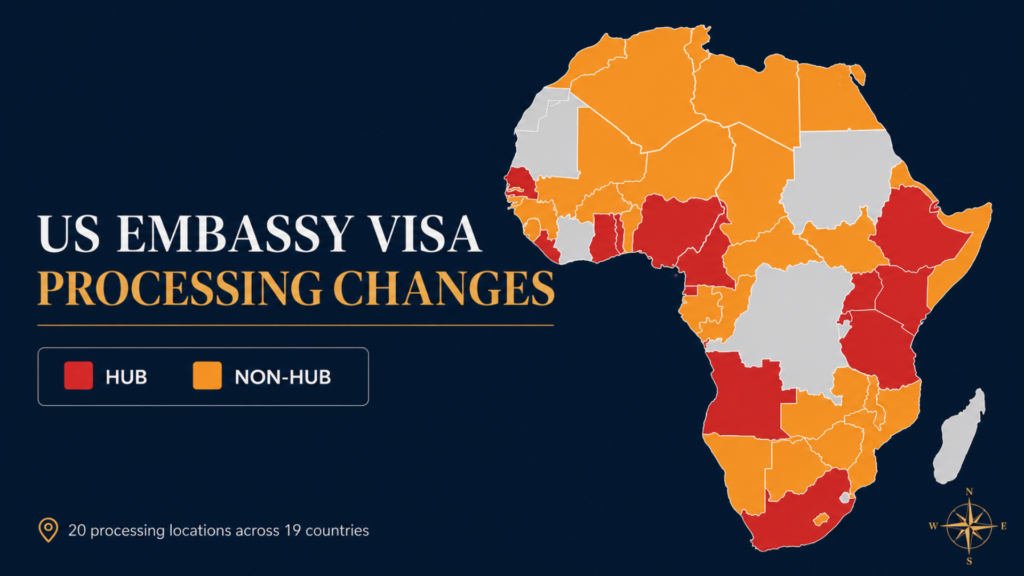
U.S. visa processing services across Africa may soon face one of the biggest changes in recent years. Reports say the U.S. State Department plans to reduce the number of embassies and consulates in Africa that process visas from almost 50 locations to only 20 regional hubs. The Associated Press reported that the plan comes from U.S. officials and an internal memo, with the change expected in June 2026, although a fixed public date has not yet been announced.
For many travelers, this may look like a normal government update. For high-net-worth individuals, business owners, investors, and globally active families, it means much more. It shows how quickly access to major markets can change when governments adjust immigration, consular capacity, and security rules.
If applicants in up to 30 African countries lose local U.S. visa processing access, many may need to travel to another country for visa interviews and consular steps. That can add cost, delay, and uncertainty to business travel, education plans, family visits, medical trips, and investment activity.
For investors, this is not only about travel. It is about control, access, and long-term planning.
What Is Changing in U.S. Visa Processing Across Africa?
The reported plan would reduce U.S. visa processing locations across Africa to 20 hubs. These hubs would serve applicants from several countries instead of allowing many countries to handle routine visa processing locally.
The change may affect both immigrant and non-immigrant visa applicants. Non-immigrant visas usually cover travel for tourism, business, study, medical care, and temporary work. Immigrant visas relate to permanent relocation.
The U.S. may still keep embassies open in countries that lose visa processing services. However, an embassy that remains open may not offer full visa interview services. That difference matters. A person may still have a U.S. embassy in their country but may need to travel abroad for visa processing.
For business owners and investors, this could change how U.S. travel is planned. A meeting that once required one local appointment may now require international travel, hotel bookings, extra documents, and more time away from business operations.
Chart: Proposed U.S. Visa Processing Hubs and Countries That May Lose Local Access
The chart below is based on reported information. The U.S. has not yet published one final official country-by-country public list for every affected location. Applicants should always check official U.S. embassy updates before making travel plans.
| Category | Countries or Locations |
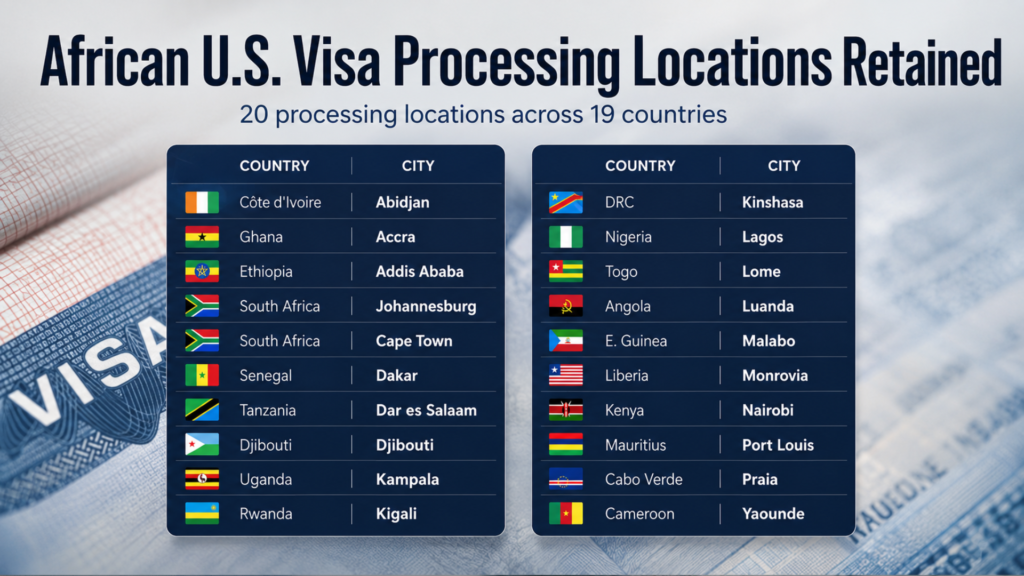
| 20 proposed U.S. visa processing hubs in Africa | Abidjan, Côte d’Ivoire; Accra, Ghana; Addis Ababa, Ethiopia; Cape Town, South Africa; Dakar, Senegal; Dar es Salaam, Tanzania; Djibouti, Djibouti; Johannesburg, South Africa; Kampala, Uganda; Kigali, Rwanda; Kinshasa, Democratic Republic of Congo; Lagos, Nigeria; Lomé, Togo; Luanda, Angola; Malabo, Equatorial Guinea; Monrovia, Liberia; Nairobi, Kenya; Port Louis, Mauritius; Praia, Cape Verde; Yaoundé, Cameroon |
| 19 African countries retaining hub access | Angola, Cameroon, Cape Verde, Côte d’Ivoire, Democratic Republic of Congo, Djibouti, Equatorial Guinea, Ethiopia, Ghana, Kenya, Liberia, Mauritius, Nigeria, Rwanda, Senegal, South Africa, Tanzania, Togo, Uganda |
| African countries that may lose local U.S. visa processing access | Algeria, Benin, Botswana, Burkina Faso, Burundi, Chad, Egypt, Eritrea, Eswatini, Gabon, The Gambia, Guinea, Lesotho, Madagascar, Malawi, Mali, Mauritania, Morocco, Mozambique, Namibia, Niger, Republic of the Congo, Sierra Leone, Somalia, South Sudan, Sudan, Tunisia, Zambia, Zimbabwe |
AP listed the 20 proposed hubs in the internal memo it reviewed. Non-hub applicants would need to travel to one of the approved locations, which could create serious travel challenges and additional costs.
Why This Matters to HNWI and Investors
HNWI and business owners often plan across borders. They may have companies in more than one country, children studying overseas, property abroad, medical appointments in major cities, or business partners in the United States.
When visa services become harder to access, the impact can reach many areas of life and business. It can affect board meetings, investor roadshows, family travel, education planning, healthcare access, trade shows, and time-sensitive investment opportunities.
For an investor, time has value. A delayed appointment can delay a deal. A missed conference can weaken business visibility. A postponed trip can affect negotiations, partnerships, and market expansion.
This is why global mobility has become part of modern wealth planning. Investors no longer look only at assets, markets, tax exposure, and returns. They also ask whether their families and businesses can move when conditions change.
A single passport can create a single point of weakness. A stronger mobility structure can create more confidence.
The Cost of Centralized Visa Access
When visa processing moves from local embassies to regional hubs, applicants may face new costs. These may include flights, hotels, local transport, meals, and time away from work or family. Some applicants may also need an entry visa for the country where the U.S. hub is located.
For families, the impact can also feel personal. Parents may need to travel for a child’s graduation. A student may need a visa interview before classes begin. A patient may need treatment in the United States. When local services are no longer available, these plans can become harder to manage.
For business owners, the cost is not only the price of travel. It is also the cost of delay. A founder who must spend several days traveling for one appointment loses time that could have been spent with clients, staff, or investors.
The people most prepared for these changes will be those who plan early and keep more than one option open.
A Clear Signal for Global Mobility Planning
The reported U.S. visa processing change in Africa reflects a wider global trend. Countries are reviewing immigration systems, tightening entry controls, improving screening, and centralizing services.
This does not mean global travel is closing. It means global access is becoming more selective.
Trusted mobility solutions may become more valuable for HNWI and investors in this environment. Well-planned residence and citizenship strategies can help families reduce friction when rules shift. They can also support long-term lifestyle, education, healthcare, and business goals.
A Plan B is not a panic decision. It is a strategic tool.
Many investors already diversify assets across currencies, markets, industries, and jurisdictions. Mobility deserves the same level of planning. Families who depend only on one travel document may face more pressure when visa systems change. Those with broader access often gain more flexibility.
The Investor View: Risk, Access, and Confidence
Smart investors understand that risk does not always appear as a market crash or political crisis. Sometimes it appears as a slower visa process, a closed appointment calendar, or a new requirement that delays travel.
Mobility risk can affect decisions in quiet but serious ways.
A business owner may delay expansion because travel access becomes uncertain. A family may rethink education plans because student visa timelines become difficult. Investor confidence may also weaken when decision-makers cannot reach key markets at the right time.
Global access now supports confidence. It gives families room to make decisions without feeling trapped by sudden policy changes.
For many HNWI, second residence or citizenship planning is not about leaving one country behind. It is about building more choice. This approach helps families protect opportunity, reduce pressure, and create smoother pathways for the next generation.
Why Well-Regulated Programs May Gain More Trust
As immigration systems become stricter, credible programs may become more attractive. Investors are likely to place more value on jurisdictions that offer clear rules, strong due diligence, transparent processing, and long-term stability.
This is important because not all mobility options are equal. Serious investors usually look for programs that protect their reputation and support their goals. They want routes that match their family needs, business plans, and risk profile.
Strong programs can offer greater travel flexibility, a secure base for family planning, education and healthcare options, long-term wealth planning support, and more confidence during global policy changes.
A well-chosen residence or citizenship strategy can also support a wider international structure for business owners. It may help with banking, investment access, relocation planning, and family security.
What African Investors Should Do Now
Investors and business owners should not wait until a travel need becomes urgent. The better approach is to review mobility exposure before problems appear.
Start by checking how often you and your family rely on visas for business, education, healthcare, and personal travel. Then identify which markets matter most to your wealth, family, and future plans. After that, review whether your current passport and residence status support those goals.
Applicants who still need U.S. visas should monitor official embassy updates, prepare documents early, and check whether they may need to attend an interview in another country. They should also avoid making non-refundable plans before their visa has been approved.
For HNWI, the bigger question is not only how to manage one U.S. visa appointment. The bigger question is how to build a mobility strategy that remains strong even when rules change.
Global Access Is Now a Strategic Asset
This reported change should not be viewed only as a challenge. It can also serve as a reminder to plan better. Global families now understand that access, stability, and flexibility matter.
For business owners, this is a chance to review travel risk. Investors can use this moment to strengthen global positioning. Families can also plan education, healthcare, and lifestyle options with more confidence.
The world is not becoming less connected. It is becoming more selective. Those who prepare early will move with greater ease and more control.
The expected reduction of U.S. visa processing services across Africa may affect up to 30 countries and change how many applicants access the U.S. visa system. For HNWI, business owners, and investors, mobility is no longer a luxury or an afterthought. It is part of risk management, family security, and long-term global strategy.
Contact us if you are interested in Citizenship by Investment
Our expert advisors will have a 1-on-1 consultation to find the best solutions for you and your family and guide you through the procedure.
Conclusion: Global Access Is Now a Strategic Asset
The expected reduction of U.S. visa processing services across Africa may affect up to 30 countries and change how many applicants access the U.S. visa system. For HNWI, business owners, and investors, the lesson is clear. Mobility is no longer a luxury or an afterthought. It is part of risk management, family security, and long-term global strategy.
As visa systems become more centralized and selective, now is the right time to review your family’s global mobility options. Our team helps HNWI, business owners, and investors explore tailored solutions through citizenship by investment and residency by investment programs designed to support stability, mobility, and long-term confidence.
Contact us today to build a stronger Plan B for your family, wealth, and future.
Frequently Asked Questions
Related Articles

Beijing Is Watching Your Wealth; Turkey Offers a Legal Pathway
In an era of rising financial scrutiny, global investors are taking action. Discover why 89% of Chinese HNWIs are exploring…

Cyprus Foreign Property Restrictions for Investors
Cyprus is considering tighter controls on property purchases by non-EU nationals as foreign demand rises. The proposals could restrict purchases…
China Ends 30-Year Foreign Investor Dividend Tax Exemption
China has ended a tax exemption that protected certain dividend income received by foreign individuals for more than 30 years….

Why 61% of UK Millionaire Investors Consider Moving Abroad
A survey of 341 wealthy UK investors found that 61% have considered becoming resident overseas, while 97% expect taxes to…

Countries Want More Than Tourists. They Want Wealthy Families.
The valuable arrival is no longer just the tourist who spends for a week. Countries are designing residency, tax and…

Europe Is Quietly Killing the Traditional Golden Visa Model
Europe’s familiar property-for-residence model is becoming harder to find. Latvia is removing real estate from its investor residence framework, following…
