
Dangote’s $35 Billion Fortune Finds a New Base in Dubai
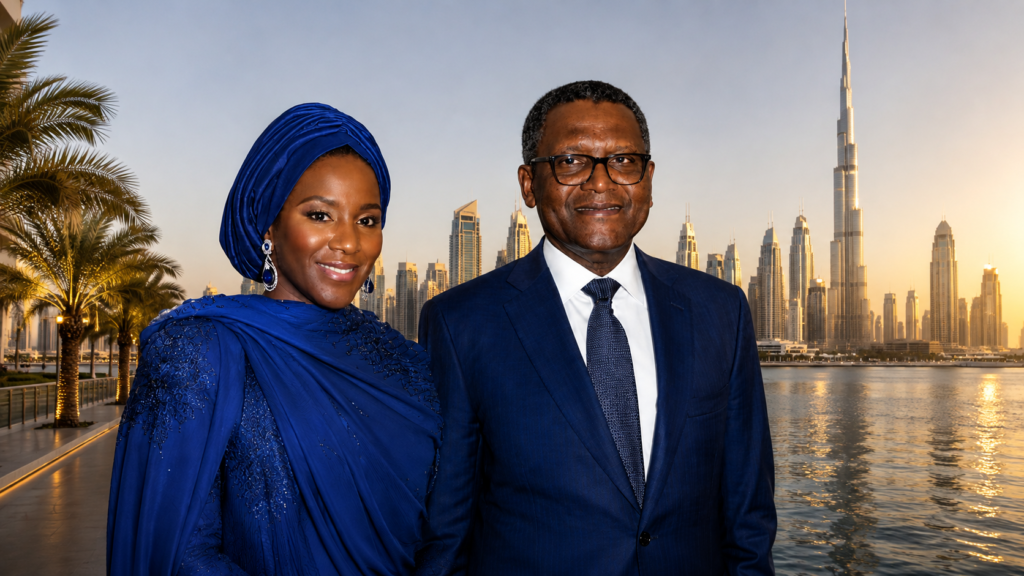
Aliko Dangote built one of Africa’s largest business empires on the continent. Now, his Dubai family office is taking a bigger role in how the family manages investment, governance and succession. Bloomberg valued Dangote’s fortune at about $35 billion during August 2026, although billionaire wealth estimates change with markets and valuation methods.
The important point is not that Dangote has moved his entire fortune to Dubai. He has not.
Instead, his family has chosen Dubai as an important centre for managing what comes next.
That distinction should interest any entrepreneur thinking beyond the next deal and towards the next generation.
The Dubai Family Office Is Entering Its Next Stage
Dangote first announced plans to establish a family office in Dubai in September 2024. At the time, he said the office would seek global investments and diversify family holdings beyond the industrial businesses that created much of his wealth.
The latest development takes that strategy further.
On August 27, 2026, Halima Dangote said the family office would ramp up operations in 2027 and become more visible from the first quarter. She said its work would cover governance, capital management and philanthropy. The family also wants the wider business enterprise to survive for eight to ten generations.
Halima already serves as Executive Director of the Dangote Family Office and International Offices in Dubai and London, according to Dangote’s official company website.
Therefore, 2027 does not mark the creation of the office. It marks a new phase in a strategy that has taken shape over several years.
Wealth Creation and Wealth Control Are Different Decisions
Dangote’s main industrial interests remain strongly connected to Africa. Cement, fertiliser, food and energy still form major parts of the wider group.
However, successful families eventually face a different set of questions.
Where should they manage investments? Which legal system best supports succession? How should family members divide control? Which jurisdiction gives the next generation access to strong banks, advisers and international markets?
The country that helps an entrepreneur create wealth does not automatically need to govern that wealth forever.
A family might own factories in Africa, invest internationally, educate children in Europe and manage family capital from Dubai.
This does not necessarily represent an exit from the original market.
It represents diversification of control.
Dubai Is Competing for More Than Wealthy Residents
Attracting wealthy families requires more than luxury property and a favourable lifestyle. The real competition is for the structures, institutions and advisers that help families manage wealth across generations.
The Dubai International Financial Centre (DIFC) recorded 1,408 family business-related entities by the end of the first half of 2026, marking a 36% increase year-on-year. Foundations grew even faster, rising 67% to reach 1,409 during the same period.
DIFC has also developed a Family Wealth Centre and a wider network of banks, asset managers, legal advisers and other specialists.
In January 2026, DIFC reported more than 1,250 family-related entities and over 600 supporting financial firms and advisers. The top 120 families operating from DIFC managed more than $1.2 trillion in assets globally.
Those numbers explain the strategy.
Dubai does not only want wealthy people to live there.
It wants them to make decisions there.
When a jurisdiction attracts the family structure behind a fortune, other activity can follow. Investment managers gain mandates. Banks gain relationships. Advisers gain work. Family members may also spend more time in that jurisdiction.
That creates a deeper economic relationship than a single property investment.
Many governments want successful entrepreneurs to invest locally, employ people and keep their capital at home.
That ambition makes sense.
Yet governments sometimes assume that capital will remain loyal simply because the entrepreneur built the original business there.
Capital does not work that way.
Rules matter. Political stability matters. Tax policy matters. Strong institutions matter. So do banking access, succession frameworks and confidence in the future.
Dangote’s case does not suggest that he has abandoned Nigeria or Africa. His major industrial interests remain tied to the continent.
Instead, the move shows that a family can remain committed to one region while choosing another jurisdiction for important parts of its wealth infrastructure.
Governments therefore compete on two fronts.
First, they compete for investment.
Then they compete for control of the structures surrounding that investment.
What Other Business Owners Can Learn
Most investors will never manage a $35 billion fortune. Still, the underlying questions appear much earlier.
As wealth grows, families often need to consider:
- How ownership will transfer to the next generation
- Who will make major investment decisions
- How to separate operating businesses from private assets
- Whether one jurisdiction creates too much political or regulatory exposure
- Where family members should hold residence rights
- How different countries treat tax residence and reporting
- Which locations provide strong banking and advisory services
Tax can influence these decisions, but it should not control the entire strategy.
A low-tax jurisdiction may offer little benefit if it creates problems with banking, succession, residence or business operations.
The right structure starts with the family’s objectives.
A Dubai Family Office Does Not Equal UAE Residency
Investors should also separate corporate structuring from immigration.
A Dubai family office does not automatically give its owners UAE residence. Likewise, the existence of Dangote’s family office does not confirm his personal immigration or tax residence.
The UAE operates separate Golden Residency routes.
The Federal Authority for Identity, Citizenship, Customs and Port Security states that qualifying public investment applicants can receive 10-year residence. Qualifying real estate investors can receive five-year residence. The authority currently lists AED 2 million as a key minimum investment requirement for these investor categories, subject to the conditions of the specific route.
Therefore, investors should coordinate immigration, corporate and tax planning without treating them as the same legal process.

Dubai Wants the Next Generation
The Dangote story highlights a larger contest for wealth.
The real prize for Dubai is not simply attracting a billionaire’s money. It is becoming a jurisdiction that a wealthy family trusts with governance, succession and future investment decisions.
That relationship can last for decades.
For business owners, the lesson is straightforward. Building wealth and preserving wealth require different decisions. A jurisdiction that helped create a fortune may not always provide the best environment for managing it across several generations.
Contact us if you are interested in Citizenship by Investment
Our expert advisors will have a 1-on-1 consultation to find the best solutions for you and your family and guide you through the procedure.
Planning the Next Generation of Wealth
Families considering a Dubai family office should review the structure alongside their residence rights, succession plans, tax position and business interests.
Imperial Citizenship advises investors, entrepreneurs and families on citizenship by investment and residency by investment across multiple jurisdictions. Our team can help assess how international residence planning fits within wider family and business objectives while keeping compliance, suitability and long-term strategy at the centre of the process.
Frequently Asked Questions
Related Articles
Beijing Is Watching Your Wealth; Turkey Offers a Legal Pathway
In an era of rising financial scrutiny, global investors are taking action. Discover why 89% of Chinese HNWIs are exploring…
Cyprus Foreign Property Restrictions for Investors
Cyprus is considering tighter controls on property purchases by non-EU nationals as foreign demand rises. The proposals could restrict purchases…

China Ends 30-Year Foreign Investor Dividend Tax Exemption
China has ended a tax exemption that protected certain dividend income received by foreign individuals for more than 30 years….

Why 61% of UK Millionaire Investors Consider Moving Abroad
A survey of 341 wealthy UK investors found that 61% have considered becoming resident overseas, while 97% expect taxes to…

Countries Want More Than Tourists. They Want Wealthy Families.
The valuable arrival is no longer just the tourist who spends for a week. Countries are designing residency, tax and…

Europe Is Quietly Killing the Traditional Golden Visa Model
Europe’s familiar property-for-residence model is becoming harder to find. Latvia is removing real estate from its investor residence framework, following…
