
7 European Tax Regimes Attracting Global Wealth in 2026
Introduction: A Strategic Shift in Global Wealth Positioning
The rise of European tax regimes is reshaping how HNWI, business owners, and investors structure their global wealth in 2026. These frameworks are no longer niche incentives. Instead, they have become essential tools for achieving tax efficiency, stability, and international mobility.
As capital becomes more mobile, investors are choosing jurisdictions that offer predictability and long-term security. European countries have responded by introducing structured tax regimes designed to attract global wealth while strengthening economic competitiveness.
As a result, investors are no longer making decisions based solely on lifestyle. They are prioritizing access, control, and strategic positioning across multiple jurisdictions.
Why European Tax Regimes Are Gaining Momentum
European governments are actively competing for global capital. Therefore, they are refining tax systems that balance attractiveness with long-term sustainability.
These regimes typically reduce complexity and provide clarity. Investors benefit from predictable tax exposure, streamlined structures, and access to stable financial ecosystems. This combination allows HNWI to manage wealth more efficiently while reducing uncertainty in an increasingly complex global environment.
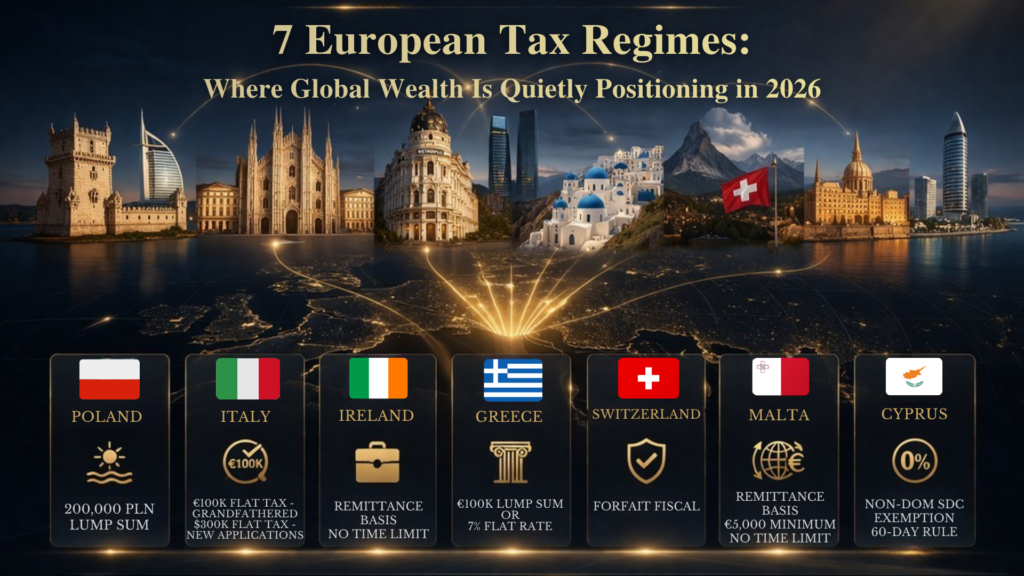
7. Switzerland: Stability Through Forfait Fiscal
Switzerland continues to set the benchmark for financial stability and discretion. Its forfait fiscal system taxes individuals based on lifestyle rather than income, creating a predictable and private framework.
This model appeals to ultra-high-net-worth individuals who prioritize long-term security and confidentiality. In addition, Switzerland’s strong legal system and global reputation reinforce its position as a leading destination for wealth preservation.
6. Poland: A Simplified Entry Point
Poland is emerging as a practical option for investors seeking simplicity. Its 200,000 PLN lump sum regime offers a clear and predictable tax structure for qualifying individuals.
While it may not yet compete with traditional financial hubs, Poland’s growing economy and lower cost base make it increasingly attractive. As a result, it is gaining attention among investors looking for efficient entry into Europe.
5. Italy: Predictability with the €300,000 Flat Tax
Italy has strengthened its appeal by introducing a €300,000 flat tax on foreign income. This regime offers a straightforward solution for globally diversified investors who value certainty.
The structure supports long-term planning and allows individuals to manage international income without complexity. Consequently, Italy remains a preferred choice for HNWI seeking both lifestyle and financial clarity.
4. Greece: Flexibility for Different Investor Profiles
Greece offers one of the most flexible tax frameworks in Europe. Investors can choose between a €100,000 lump sum tax on global income or a 7% flat rate for pensioners.
This dual approach allows individuals to tailor their tax strategy based on their financial profile. At the same time, Greece’s improving infrastructure and cost advantages enhance its overall appeal.
3. Ireland: Long-Term Control Through Remittance
Ireland provides a well-established remittance-based tax system with no strict time limitation. This allows investors to control when foreign income becomes taxable, creating significant planning flexibility.
In addition, Ireland’s strong economy and transparent legal framework make it a reliable base for international business and investment activity.
2. Malta: Flexible Structuring with Low Entry Threshold
Malta builds on the remittance model by offering a flexible and accessible structure. With a low minimum tax requirement and no strict duration, it allows investors to plan over the long term.
Its English-speaking environment and business-friendly policies further support its position as a hub for internationally active entrepreneurs.
1. Cyprus: Efficiency and Accessibility Combined
Cyprus stands out as one of the most efficient tax regimes in Europe. Its non-dom system offers zero tax on dividends and interest, making it highly attractive for global investors.
The 60-day residency rule adds a layer of accessibility that few jurisdictions can match. As a result, Cyprus has become a leading choice for those seeking both flexibility and tax efficiency.
A Broader Shift in Global Capital
The expansion of European tax regimes reflects a wider transformation in global finance. Capital is becoming more selective and increasingly aligned with jurisdictions that offer transparency and long-term security.
Rather than concentrating wealth in a single location, investors are building multi-jurisdictional structures. This approach improves resilience while unlocking access to new opportunities.

Stability and Mobility as Core Strategy
For HNWI, stability and mobility now define effective wealth planning. Access to multiple jurisdictions allows investors to manage risk while maintaining flexibility.
This shift is not temporary. It reflects a deeper change in how global wealth is structured and protected.
The Evolution of the Plan B Approach
The concept of a Plan B has moved beyond contingency planning. Today, it is a proactive strategy that ensures access, continuity, and control.
Investors are no longer waiting for uncertainty. Instead, they are positioning themselves in advance, securing options that support long-term objectives.
Investor Confidence Driving Change
The growth of these regimes highlights strong investor confidence. Governments are not only opening their doors but actively designing systems that attract global capital.
This alignment between policy and investor demand creates a more connected and efficient global financial landscape.
Contact us if you are interested in Citizenship by Investment
Our expert advisors will have a 1-on-1 consultation to find the best solutions for you and your family and guide you through the procedure.
Conclusion: Positioning for Long-Term Advantage
The continued rise of European tax regimes demonstrates how global wealth is evolving. Investors are prioritizing stability, mobility, and strategic positioning over short-term gains.
For HNWI, business owners, and investors, this presents a clear opportunity to align with jurisdictions that support long-term growth and flexibility.
If you are looking to structure your wealth across borders and secure access to leading financial environments, now is the time to explore tailored strategies that align with your long-term vision within the evolving landscape of European tax regimes.
Frequently Asked Questions
Related Articles

Beijing Is Watching Your Wealth; Turkey Offers a Legal Pathway
In an era of rising financial scrutiny, global investors are taking action. Discover why 89% of Chinese HNWIs are exploring…
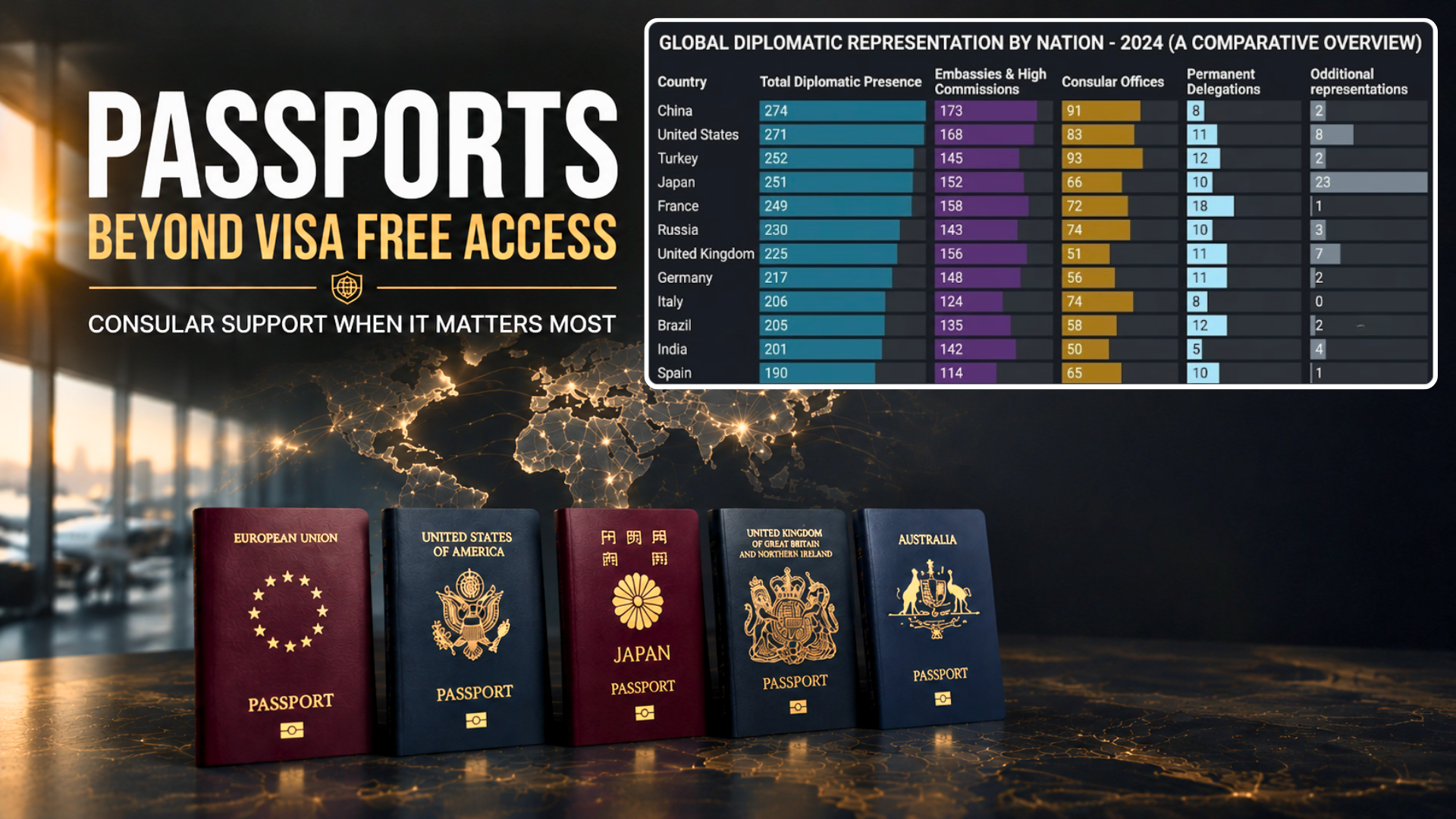
Which Passport Offers the Most Reliable Consular Support
Consular support can influence how effectively a government assists citizens during emergencies abroad. This guide explains what HNWI, business owners,…

A Stronger Plan B Beyond Visa-Free Travel
Visa-free travel offers convenience, but it does not guarantee the right to live, work, study, or protect business continuity abroad….

Dubai Golden Visa 2026 Strengthens Investor Confidence
Dubai’s Golden Visa programme issued about 66,000 approvals during the first half of 2026, while new residence permits passed one…

Antigua’s New CIP Bill Adds Audits and a 30 Day
Antigua’s New CIP Bill proposes annual financial audits, operational reviews, and a 30 day stay during the first five years…

St. Kitts and Nevis Plans First African Biometric Centre in
St. Kitts and Nevis plans to open its first African biometric centre in Lagos. The move could make enrolment easier…
