
Where to Invest $2 Million for Passports and Residency

Most investors would not put $2 million into one stock, one bank or one property market. Yet many successful families remain dependent on one country for their right to live, conduct business and establish their tax base.
A passports and residency portfolio applies the logic of diversification to jurisdictions.
With around $2 million, it is possible to combine residence rights across the Americas, Middle East and Asia with citizenship in Türkiye and the Caribbean. The purpose is not to collect documents. Each country should add something different to the investor’s wider position.
Here is what such a portfolio could look like.
How Could the $2 Million Be Allocated?
A possible structure includes:
- Panama: B/.300,000 in qualifying investment for permanent residence
- UAE: AED 2 million, approximately US$545,000, for qualifying Golden Residency
- Thailand: US$500,000 in qualifying investment under the Wealthy Global Citizen LTR category
- Türkiye: US$400,000 in qualifying real estate for citizenship
- St. Kitts and Nevis: US$250,000 through the Sustainable Island State Contribution
Together, the headline thresholds come to approximately US$1.995 million.
That does not mean the entire strategy can be completed for exactly $2 million. Due diligence, government charges, professional fees, property expenses and other costs must also be budgeted.
More importantly, the five allocations do different jobs.
Panama: Permanent Residence in the Americas
Panama’s Qualified Investor programme provides permanent residence through qualifying investments.
The minimum real estate investment remains B/.300,000 following an October 2024 amendment that prevented a previously planned increase to B/.500,000.
Its role in this portfolio is relatively straightforward: Panama provides a permanent residence position in the Americas through an investment-backed route.
The country’s territorial tax system can also be relevant to internationally structured investors. However, obtaining Panamanian residence does not automatically determine where an individual pays tax. Income source, physical presence and connections to other jurisdictions still matter.
For someone seeking an established base closer to North American markets, Panama fills a clear geographic role.
UAE: A Business Base for Around $545,000
This is where timing becomes particularly important.
The UAE adds something very different.
Qualifying public investors can obtain a 10-year Golden Residency with an investment of at least AED 2 million, or roughly US$545,000. Separate rules apply to qualifying real estate investors.
Beyond the residence permit itself, the UAE offers access to a major international centre for banking, aviation, investment and business. There is also no federal personal income tax on individuals.
Choosing the underlying asset still requires care.
Property purchased primarily to qualify for residence must make sense on its own merits. Price, rental demand, liquidity and market exposure do not disappear because a Golden Residency is attached.
A good immigration programme cannot rescue a bad investment.
Thailand’s Wealthy Global Citizen Long-Term Resident programme requires at least US$500,000 in qualifying Thai investments.
That figure alone is misleading.
Applicants must also demonstrate at least US$1 million in worldwide assets and meet applicable insurance or financial coverage conditions. Eligible investments can include Thai government bonds, qualifying business investments and property.
Thailand therefore works best in this portfolio when the investor genuinely wants an Asian base.
Committing half a million dollars solely to obtain another residence status is difficult to justify if the country has little relevance to the family’s lifestyle, business interests or future plans.
Residence should solve a problem, not create another asset to manage.
Turkey: Turning $400,000 Into a Citizenship Route
Turkey shifts the portfolio from residence into citizenship.
Foreign investors may qualify for Turkish citizenship by purchasing at least US$400,000 in eligible real estate, subject to a minimum three-year restriction on resale. Alternative qualifying investment categories generally begin at US$500,000.
Unlike a residence permit, citizenship creates a permanent legal relationship with the country. That can make the allocation more significant from a long-term planning perspective.
Still, the property and passport should be assessed separately.
Location, valuation, title, rental potential and resale prospects all matter. Overpaying for qualifying real estate simply to obtain citizenship can weaken the economics of the entire transaction.
Citizenship may be valuable. The property still needs to justify its price.
St. Kitts and Nevis: Where the Portfolio Stops Being Recoverable
The remaining US$250,000 introduces a different type of capital decision.
St. Kitts and Nevis currently offers citizenship through its Sustainable Island State Contribution from US$250,000 for a main applicant or family of up to four, excluding applicable fees.
Unlike a property purchase or qualifying deposit, this contribution is non-refundable.
That does not automatically make it a poor allocation. It simply means the investor is purchasing a different kind of value. There is no asset to sell later; the economic benefit lies in obtaining citizenship.
Approved real estate routes are also available but require more capital, taking this particular structure beyond the $2 million headline figure.
Investors therefore need to distinguish between capital deployed into an asset and capital spent to acquire a permanent legal status.
They are not the same investment.

Does This Create a Tax-Free Portfolio?
No – at least not automatically.
This is one of the most important distinctions in international planning.
A passport can change where you are allowed to live. It does not, by itself, change where you owe tax.
Someone holding UAE Golden Residency may remain a tax resident elsewhere. Turkish or Caribbean citizenship does not cancel existing tax obligations. Moving away from a country can also create exit taxes or other liabilities.
Business owners face additional questions around where companies are managed, where income is generated and where economic activity takes place.
These programmes create choices over where an investor could live. Turning those choices into an efficient tax structure requires separate cross-border tax planning based on the individual’s circumstances.
The Real Investment Is Jurisdiction Diversification
There is a wider point behind the $2 million calculation.
A family may hold assets across five countries while retaining the legal right to live permanently in only one.
That is still a concentration risk.
Governments can change tax policy, immigration rules, reporting requirements and investment thresholds. Investors cannot control those decisions, but they can decide how dependent they want to remain on a single jurisdiction.
More countries are not necessarily better.
For one family, Panama and the UAE may provide everything required. Another may value citizenship more highly than multiple residence permits. A business owner focused on Asia will view the portfolio differently from a family whose commercial interests are concentrated in Europe.
The right question is not, “How many passports can $2 million buy?”
It is, “What should each jurisdiction do for me?”
Perhaps one provides a business base. Another offers permanent residence. A third provides citizenship. Others may support family relocation or access to a strategically important region.
A $2 million passports and residency portfolio only works when those roles are clear.
The strongest portfolio is not the one with the most passports.
It is the one where every jurisdiction earns its place.
Contact us if you are interested in Citizenship by Investment
Our expert advisors will have a 1-on-1 consultation to find the best solutions for you and your family and guide you through the procedure.
What Would Your $2 Million Strategy Look Like?
A $2 million international strategy requires more than adding together programme minimums. Investment quality, family eligibility, tax exposure, due diligence and long-term usefulness all affect whether the structure makes sense.
Imperial Citizenship advises international investors and families on citizenship by investment and residency by investment, helping clients assess which jurisdictions fit their capital, family and long-term objectives. Speak with our team to explore a strategy designed around your circumstances rather than a standard list of programmes.
Frequently Asked Questions
Related Articles
Beijing Is Watching Your Wealth; Turkey Offers a Legal Pathway
In an era of rising financial scrutiny, global investors are taking action. Discover why 89% of Chinese HNWIs are exploring…

Grenada CBI Reform Raises Questions Over Pending Applications
Grenada’s proposed CBI reforms go beyond a new physical presence requirement. Provisions concerning pending applications raise a wider question about…
The West Is Pushing to End Caribbean Citizenship by Investment
Caribbean CBI faces a major period of change as European pressure increases ahead of 2028. For HNWI, business owners and…
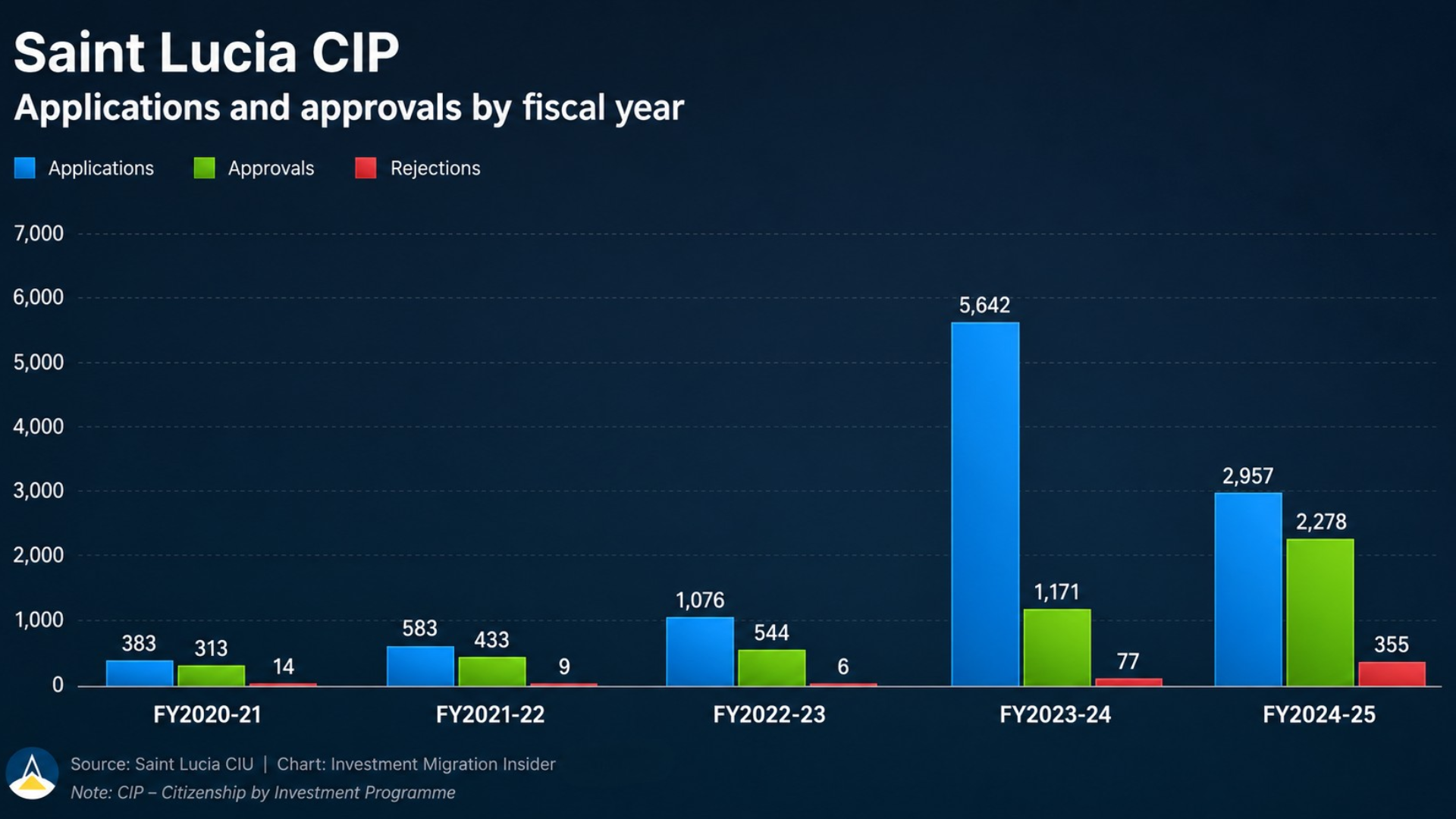
Saint Lucia Citizenship by Investment Approvals Reach 2,278
Saint Lucia approved 2,278 citizenship by investment applications in 2024/25 while completing 2,633 decisions. The programme also rejected 355 cases,…

Dubai Is Proving Its Strength Despite Regional Uncertainty
Dubai is showing why resilience matters to global investors. Despite regional uncertainty, its business environment, infrastructure, connectivity, and financial systems…

Bulgaria Golden Visa Could Face New Residency Rules
The Bulgaria Golden Visa could face an important change as lawmakers consider a new physical presence requirement for permanent residents….
