
Bond Investment Programs: Don’t Just Buy a Passport, Get Paid for It

Introduction
Investment migration is evolving.
For years, investors associated second residency or citizenship with real estate. You buy property, hold it, and gain access to a new country. But today, a growing number of governments are moving away from that model.
In its place, bond investment residency programs are gaining traction.
These programs allow investors to earn annual returns while securing residency or citizenship. In some cases, yields are modest. In others, they reach as high as 35%.
But as attractive as this sounds, the reality is more nuanced. Higher returns often come with higher risks, especially when currency exposure is involved.
Why Bond Investment Residency Programs Are Growing
Governments are rethinking how foreign capital should enter their economies.
Real estate programs have faced criticism for driving up housing prices without increasing supply. This has led to political pressure and policy changes in several countries.
Bond investment residency programs offer a more balanced solution.
Investor capital goes directly to the government rather than into property markets. This helps fund public spending while giving investors a structured and transparent financial instrument.
For investors, the appeal lies in predictability. Bonds come with defined terms, known yields, and in most cases, a return of capital at the end of the holding period.
However, one factor remains critical.
Currency Risk Can Change Everything
All these programs are tied to local currencies.
This means your real return depends not just on the interest rate, but also on how the currency performs over time. A high yield can quickly lose its value if the currency weakens.
This is why the highest-yield opportunities are often found in markets with higher economic volatility.
Understanding this balance is essential when evaluating bond investment residency programs.
Comparing Top Bond Investment Residency Programs
Across global markets, several countries stand out. Each offers a different mix of return, risk, and long-term benefit.
Italy
Italy offers a stable, low-risk option within the eurozone. Investors commit €2 million into government bonds and receive around 2.4% annually. With low inflation, returns are modest but positive in real terms.
This program is best suited for those prioritizing capital preservation and long-term European residency.
Greece
Greece requires €500,000 in government bonds and offers yields of about 3.4%. While returns are slightly higher than Italy, inflation reduces real gains.
The appeal lies more in lifestyle and tax advantages than in financial performance.
Indonesia
Indonesia provides stronger returns, with yields exceeding 6% on investments starting at $350,000. This creates a compelling financial case.
However, the program only grants temporary residency, with no pathway to permanent status or citizenship.
Jordan
Jordan offers direct citizenship for a $1 million bond investment, with yields around 5% annually. Inflation remains low, making returns relatively stable.
This option is ideal for investors seeking Middle Eastern citizenship with moderate economic risk.
Sri Lanka
Sri Lanka offers yields above 11%, making it one of the highest-return options available.
However, the country’s recent sovereign default in 2022 highlights the level of risk involved. While recovery is underway, economic stability is not guaranteed.
Turkey
Turkey presents the most aggressive opportunity. With a $400,000 investment, investors can secure citizenship in three years while earning yields of up to 35%.
But high inflation and currency depreciation significantly impact real returns. Without currency protection, this option carries substantial risk.

Key Takeaways: Matching Risk to Reward
Each bond investment residency program offers a different balance between risk and return.
Italy and Greece provide stability but lower yields. Indonesia and Jordan sit in the middle, offering stronger returns with certain limitations. Sri Lanka and Turkey deliver high yields, but with elevated economic and currency risks.
The right choice depends on your priorities. Some investors focus on stability and long-term security, while others are willing to accept higher risk for stronger returns or faster access to citizenship.
Contact us if you are interested in Citizenship by Investment
Our expert advisors will have a 1-on-1 consultation to find the best solutions for you and your family and guide you through the procedure.
Conclusion
Bond investment residency programs are reshaping the investment migration landscape.
They offer a more liquid and transparent alternative to real estate, with the added benefit of potential returns. But they also require a deeper understanding of risk, especially when it comes to currency exposure and economic stability.
The smartest investors are not chasing the highest yield.
They are aligning their investments with long-term goals, global mobility strategies, and risk tolerance.
Because in the end, the real value is not just the return.
It is the control and flexibility that comes with it.
The right investment can do more than generate returns, it can expand your global freedom. Connect with us to design a strategy that positions your capital and lifestyle where it matters most.
Frequently Asked Questions
Related Articles

Beijing Is Watching Your Wealth; Turkey Offers a Legal Pathway
In an era of rising financial scrutiny, global investors are taking action. Discover why 89% of Chinese HNWIs are exploring…
Saint Lucia Citizenship by Investment Approvals Reach 2,278
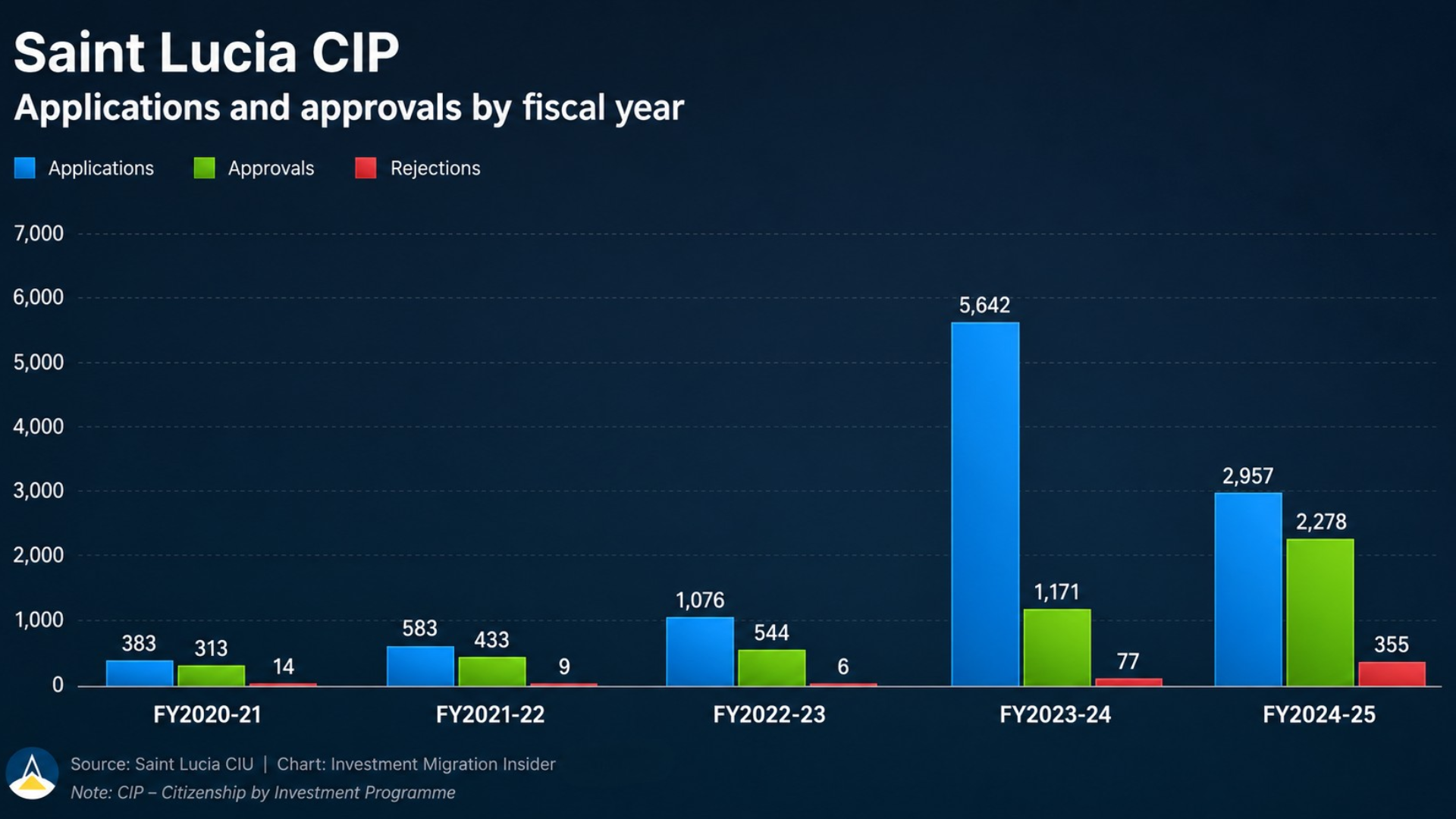
Saint Lucia approved 2,278 citizenship by investment applications in 2024/25 while completing 2,633 decisions. The programme also rejected 355 cases,…

Dubai Is Proving Its Strength Despite Regional Uncertainty
Dubai is showing why resilience matters to global investors. Despite regional uncertainty, its business environment, infrastructure, connectivity, and financial systems…

Bulgaria Golden Visa Could Face New Residency Rules
The Bulgaria Golden Visa could face an important change as lawmakers consider a new physical presence requirement for permanent residents….

Greek Golden Visa for Nigerians Seeking European Residency
The Greek Golden Visa for Nigerians gives HNWI, business owners and investors a flexible route to European residency. With Schengen…

Grenada Proposes New Residency Rules for CBI Investors
Grenada is considering new residency and compliance measures for its Citizenship by Investment Programme. Proposed changes include physical presence, integration,…
